
Buyer's Desk
Used MRI Site Requirements: What to Check Before Buying
May 23, 2026 · 6 min · Medical Imaging Specialists
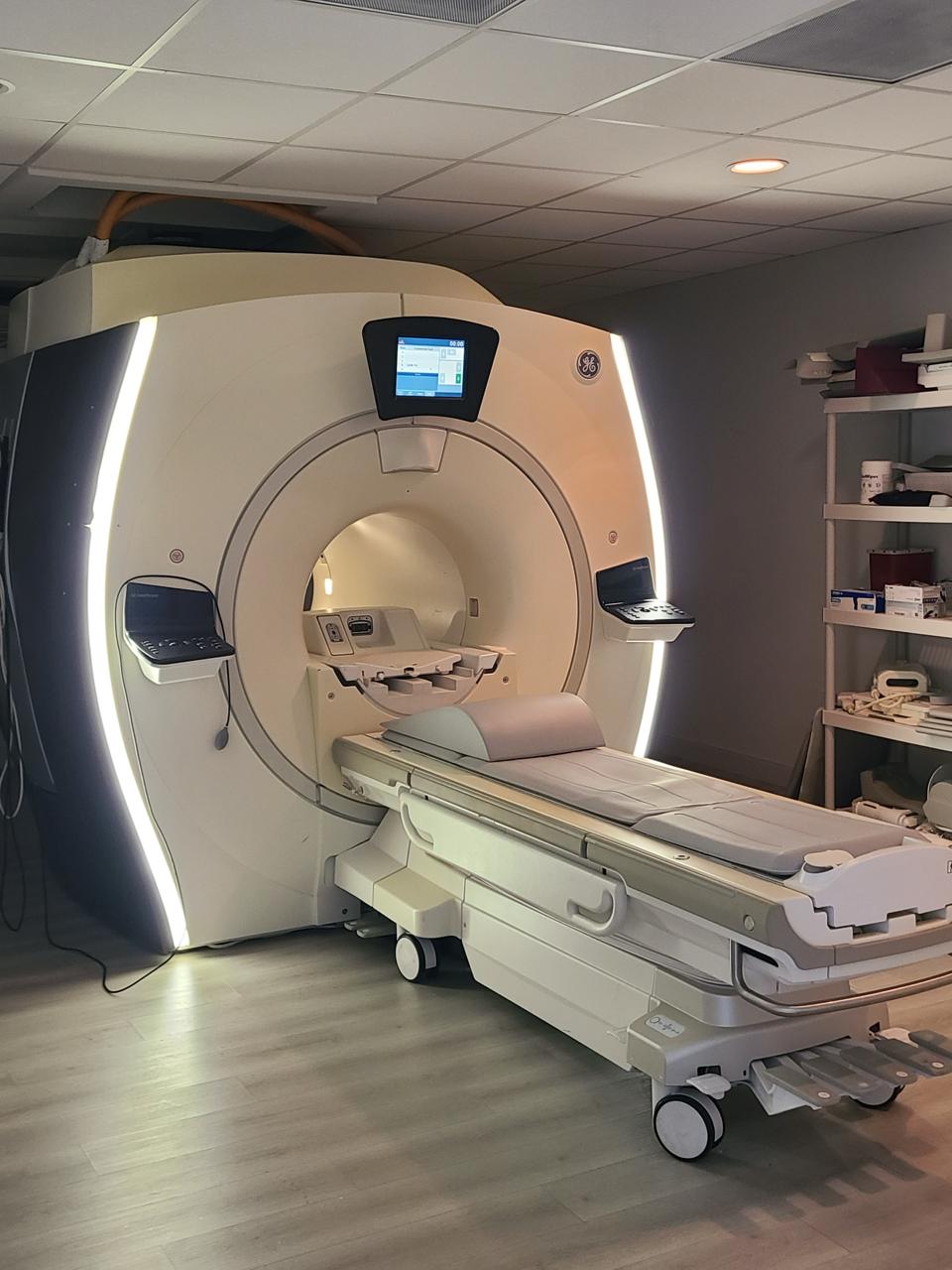
Practical considerations, risk points, and what to ask before you buy, service, move, or maintain imaging equipment.
Before buying a used MRI machine, confirm that the site can support the scanner’s room size, floor and access path, RF shielding, magnetic safety zones, electrical service, HVAC or chiller requirements, rigging route, delivery access, service clearance, network connections, and local project requirements. Exact requirements vary by manufacturer, model, field strength, magnet type, room design, and whether the project is a new build, replacement, or relocation.
That check belongs before the purchase order, not after the magnet is already scheduled to move.
Why site readiness belongs in the buying decision
A used MRI purchase is not just an equipment transaction. It is an equipment, room, rigging, service, and workflow project wrapped together.
Scanner price gets the attention because it is the easy number to compare. But the site decides whether that MRI can be installed on schedule, supported after go-live, and operated without surprise construction or uptime problems. A good equipment deal can become expensive if the room cannot support the magnet, the delivery path does not work, the chiller is undersized, or the RF shielded enclosure needs repair.
This is especially important for outpatient centers, startup clinics, and facilities replacing an older MRI. A room that worked for one system may not automatically work for the next. Field strength, bore size, cabinet layout, cable routes, helium system, fringe field, and service clearance can all change.
If you are still comparing platforms, start with the refurbished MRI scanner buying guide and the 1.5T vs 3T MRI field strength guide.
Core used MRI site-requirement checklist
Every project should start with the OEM pre-installation manual or site planning guide for the exact MRI model. Generic rules are useful for screening, but the model-specific document is what your architect, engineer, shielding vendor, electrician, HVAC contractor, and project team need to verify.
Review these items before committing to a used MRI:
- Scan room dimensions, ceiling height, and table/patient clearance
- Magnet footprint, equipment cabinet layout, and service access
- Floor loading for the magnet and rigging path into the room
- Door widths, hallway turns, elevator capacity, dock access, crane access, and roof or wall openings if needed
- RF shielding condition or new RF shield design
- Magnetic fringe field and controlled access around the 5-gauss line
- Electrical service, grounding, transformer needs, and panel capacity
- HVAC, chilled water, chiller, equipment-room cooling, humidity, and heat load
- Quench pipe routing and helium handling where applicable
- Control room, equipment room, patient flow, and safety-screening areas
- Network, PACS/RIS, DICOM, modality worklist, phone, and IT support
- Local permitting, inspections, physics, shielding, safety, and facility-policy requirements
Do not make this a one-person checklist. MRI site planning crosses multiple trades. MIS can help structure the equipment side, but qualified site planners, engineers, shielding vendors, physicists, electricians, riggers, and local authorities may need to verify their own scope.
Existing MRI room vs. new MRI suite
A new MRI suite gives the project team a clean sheet, but it also means every requirement has to be designed from scratch: RF shielding, magnetic safety zones, electrical service, chilled water or chiller planning, quench vent routing, structural support, patient flow, and equipment-room heat load.
Replacing an existing MRI can be faster, but it is not automatic. The older room may have been designed for a different footprint, lower heat load, different field strength, different cable routes, or a different cabinet layout. The RF shield may need testing or repair. The delivery path that worked years ago may have changed because of renovations, door replacements, new flooring, or added walls.
The mistake is assuming, “It is already an MRI room, so we are fine.” Maybe not.
For a deeper technical overview, read MIS’s MRI site planning guide for RF shielding, cryogens, and room requirements.
Questions to ask before selecting the MRI model
The safest buying process works backward from clinical need and site reality at the same time. If either side is ignored, the project gets risky.
Ask these questions before locking the model:
- What studies must the scanner support: neuro, spine, MSK, body, breast, vascular, cardiac, or advanced applications?
- Is 1.5T enough, or is there a clinical reason to consider 3T?
- Does patient comfort require wide-bore, open MRI, or a shorter bore?
- What coils, software options, and workstation capabilities are included?
- Is the magnet superconducting or permanent, and what does that mean for cryogens, chiller, room design, and uptime?
- Are parts and service support realistic for the model in your region?
- What refurbishment documentation, service history, and warranty or service expectations are available?
- Does the equipment vendor understand the installation assumptions, or are they just selling the scanner?
The answer may point to a different machine than the one that looked best on price. A site-constrained outpatient center may be better served by a practical 1.5T wide-bore system than by a bargain 3T that creates shielding, service, or workflow problems. Current MRI categories and availability can be reviewed through MRI equipment, but the final fit should be scoped against your room, clinical use, and support plan.
Rigging, power, HVAC, and environment
MRI rigging is where many used-equipment projects get humbled. The magnet is heavy, sensitive, and unforgiving. Before buying, gather delivery-path photos, room drawings, dock information, hallway dimensions, door widths, ceiling heights, elevator data if relevant, crane access, roof or wall opening assumptions, and any site restrictions. Confirm whether work has to happen after hours, whether permits or insurance certificates are needed, and who coordinates building protection.
If the MRI is being removed from another facility, deinstallation matters too. Poor removal practices can damage components, lose accessories, create documentation gaps, or delay shipment.
MRI uptime also depends heavily on environment. Power quality, cooling, humidity, chilled water, equipment-room ventilation, and chiller performance all affect reliability. Do not rely on universal numbers. Requirements vary by manufacturer, model, and configuration.
For ongoing support planning, review what is included in MRI preventive maintenance and MIS service support.
What to send MIS before requesting a used MRI quote
A better intake produces a better quote. If you only send “Need used MRI pricing,” the response can only be generic. If you send site and project details, the team can help screen equipment options against reality.
Send MIS:
- Desired MRI type, field strength, bore preference, and clinical use
- Manufacturer or model preference if you have one
- Facility location and whether the project is new build, replacement, or relocation
- Existing system details if replacing an MRI
- Room drawings, photos, ceiling height, and known site constraints
- Delivery path photos from dock or entry point to scan room
- Known power, HVAC, chiller, shielding, or quench-pipe information
- Target timeline, budget range if available, and decision deadline
- Service expectations after installation: PM-only, full service, time and materials, or parts support
That information helps MIS decide whether the next step is equipment sourcing, site-planning coordination, service planning, a mobile/interim option, or a broader replacement strategy. If fixed-site timing is tight, compare the plan against mobile MRI leasing and mobile imaging leasing as a bridge.
FAQ
Can a used MRI machine go into an existing MRI room?
Often, yes, but the room still needs validation against the exact replacement model. Check RF shielding, room dimensions, power, cooling, quench routing, service clearance, cabinet layout, delivery path, and magnetic safety zones before assuming the room is ready.
Does every MRI machine need a chiller?
No. Many superconducting systems require chilled water or dedicated cooling support, but permanent-magnet and low-field systems may have different requirements. Verify the exact model and configuration.
How much space is needed around an MRI machine?
It depends on the manufacturer, model, patient table, cabinet layout, service clearance, and room design. Use the OEM site planning guide and have the room reviewed before purchase.
Should I choose the MRI model first or verify the site first?
Do both together. Clinical requirements narrow the model list, but site limitations can eliminate choices quickly. Compare equipment fit, room fit, rigging fit, and support fit before committing.
Can MIS help with deinstallation, rigging, or site-planning coordination?
MIS can help structure the equipment-side conversation and coordinate project needs around sourcing, deinstallation, logistics, installation support, parts, and service. Final engineering, shielding, permitting, safety, and construction approvals should come from the qualified professionals responsible for those scopes.
Talk through the site before you buy the magnet
Planning to buy a used MRI? Send MIS the target model or desired specs, facility location, room drawings/photos, existing equipment details, delivery-path constraints, timeline, and service expectations. Start with MRI equipment, request a scoped project quote at /quote, or contact MIS before committing to a scanner that may not fit the room.
Schema recommendation
Use Article or BlogPosting schema for the main post and FAQPage schema for the FAQ section. Add BreadcrumbList sitewide if available. Product or Service schema should live on approved MRI equipment, leasing, and service pages rather than being forced into this blog post.
Need help with this exact problem?
Send the modality, site location, timeline, and any system details. MIS will route the request by intent.
Related resources
Buyer's Desk
What Is a Fair Price for Used X-Ray Equipment?
A fair used X-ray equipment price depends on scope, detector condition, site readiness, installation, service, parts, and support.
Buyer's Desk
How Much Does Used Medical Imaging Equipment Cost?
Used medical imaging equipment cost depends on modality, model, condition, site work, installation, service, parts, and support scope.
Buyer's Desk
Best Used MRI for an Outpatient Imaging Center
Choose the right used MRI for an outpatient center by matching field strength, bore size, coils, site needs, service, and volume.