
Ops Playbook
Who Determines X-Ray Room Shielding Requirements?
May 30, 2026 · 6 min · Medical Imaging Specialists
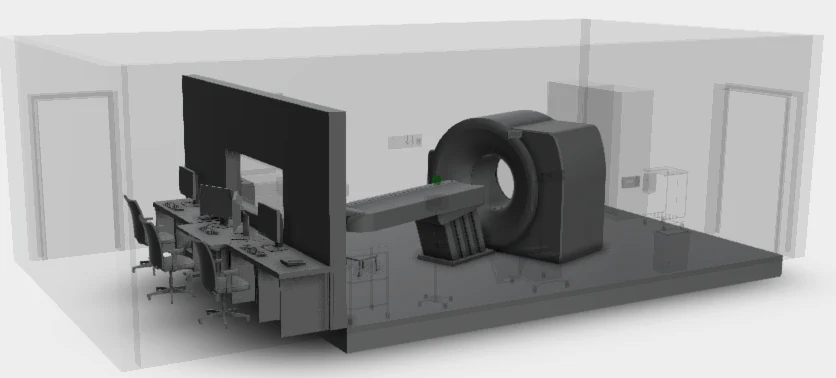
Practical considerations, risk points, and what to ask before you buy, service, move, or maintain imaging equipment.
X-ray room shielding requirements are determined by a qualified medical physicist or radiation-safety professional using the exact equipment, room layout, workload, occupancy around the room, and state or local rules. A vendor can provide equipment details and site-planning support, but the shielding decision should not be guessed from a generic chart. Before buying X-ray equipment, confirm who is responsible for the shielding review, what documentation they need, and whether the room requires construction changes, inspection, or approval before clinical use.
Shielding mistakes show up late, after the equipment is bought, the room is scheduled, and the project team realizes the walls, doors, control area, or paperwork were never properly reviewed.
Why shielding belongs at the start of an X-ray project
Shielding is one of the easiest X-ray site requirements to underestimate. Buyers often assume that if an X-ray room already exists, it is automatically ready for the next system. Sometimes it is. Sometimes the old room was designed for a different workload, different equipment, different wall layout, or different adjacent occupancy.
An urgent care replacing an older room, an orthopedic group adding digital X-ray, and a clinic converting a regular exam room all have different risk points: walls, doors, control-booth location, view window placement, tube orientation, patient flow, and documentation.
MIS can help match equipment to the room and identify what the project team needs. But shielding itself is a site-specific radiation-safety decision. Treat it as part of project readiness before final pricing, alongside room fit, delivery route, power, network, and service access. If you are early in planning, start with the broader X-ray equipment site requirements guide before narrowing into shielding.
Who should review X-ray room shielding?
The shielding review should be handled by the appropriate qualified professional for the facility and jurisdiction. In many projects, that means a medical physicist, health physicist, radiation-safety consultant, architect, engineer, or state-recognized reviewer. The exact title depends on the state, facility type, and project scope.
The person approving shielding should understand diagnostic X-ray radiation protection, room design, workload assumptions, occupancy factors, and applicable local requirements. A reseller, installer, contractor, or equipment broker should not casually tell you “the room is fine” unless that statement is backed by the right professional review.
MIS can still provide equipment-side information: system type, model, configuration, tube/table/wall stand layout, installation scope, room photos needed, and what the physicist or project team typically asks for. That support helps the review move faster. It does not replace the review.
For buyers comparing vendors, this is a useful filter. A serious partner will ask who is handling shielding and documentation. A risky one will skip the question because skipping it makes the quote look easier.
What information does the shielding reviewer need?
A shielding reviewer cannot evaluate the room from “we need an X-ray machine.” They need project details.
Useful inputs usually include system type, clinical use, expected patient volume, room dimensions, wall construction, floor and ceiling details, control area, tube orientation, table and wall stand position, distance to occupied spaces, adjacent room use, building layout, and replacement versus new-room status.
Photos help, but dimensioned drawings are better. Send drawings if available, plus photos from all four corners, the control area, doorway, ceiling, floor, existing equipment, nameplates, generator cabinet, wall stand, table, and delivery path. If the room has shielding documentation, inspection records, or previous physicist reports, collect those early.
The equipment quote also matters. A portable X-ray unit, fixed DR room, R&F room, C-arm, DEXA scanner, and detector upgrade are not the same shielding conversation. If you are unsure what to send before asking for pricing, use the X-ray equipment quote checklist. The same information that makes a quote accurate often makes the shielding review cleaner.
Replacement rooms are not automatically approved
The most common mistake is assuming an existing X-ray room is grandfathered for anything new. A replacement project may be straightforward, but it still deserves a review.
The new system may have a different tube position, generator capability, table orientation, wall stand location, detector workflow, control console position, or expected workload. The clinic may also be using the room differently than the prior owner did. Adjacent spaces can change from storage to offices or exam rooms.
Even when the shielding is physically adequate, documentation may be missing. That can slow installation, inspections, or internal facility approval. For a buyer, the question is not just “is there lead in the wall?” It is “can we document that this room is appropriate for this system and this use?”
That is why MIS prefers to see current photos, equipment details, room information, and site-planning status before a buyer commits to hardware. The goal is avoiding a project that looks inexpensive until the room becomes the problem.
How shielding affects equipment selection and quote accuracy
Shielding can change the practical equipment decision. If a room has limited space, difficult construction constraints, expensive wall modifications, or an awkward control area, the best system on paper may not be the best system for that site.
This is especially true with used or refurbished X-ray equipment. Buyers often focus on price first, then discover that installation scope, detector workflow, generator placement, workstation location, or shielding documentation affects the real cost.
A complete X-ray quote should account for equipment configuration, installation assumptions, room readiness, removal of old equipment, delivery access, power, network/PACS needs, service support, and facility responsibilities. Shielding review should be identified early, not buried in fine print.
If you are comparing used X-ray systems now, read the used X-ray equipment buying checklist and the guide on how much used X-ray equipment costs.
Common shielding planning mistakes
The biggest mistake is letting the equipment purchase outrun the room review. The second biggest is assuming that the contractor, electrician, equipment seller, and physicist are all handling the same scope when nobody has actually assigned responsibility.
Watch for these red flags:
- No one can name who is reviewing shielding.
- The room has no current drawings or measurements.
- The buyer assumes the old X-ray room is automatically acceptable.
- The quote does not mention site responsibilities.
- Adjacent spaces and occupancy have not been documented.
- The control area location is treated as a furniture decision.
- The installation date is set before local review or inspection steps are understood.
- PACS, workstation, and service access are planned separately from room layout.
What to send MIS before choosing an X-ray system
Before requesting a final X-ray equipment quote, send MIS the facility location, clinical use case, system type, replacement versus new-room status, room dimensions, drawings, room photos, current equipment details, shielding documentation, delivery constraints, timeline, and service expectations.
If you already have a physicist or radiation-safety consultant involved, include them early. If not, identify that gap before the project gets too far. MIS can match available X-ray options to the room, but final shielding and regulatory approval need site-specific review.
For equipment planning, start with /equipment/x-ray-equipment/ or request a project quote at /quote. For service planning after installation, MIS also supports /services and /parts, which matters because a room that installs cleanly still needs to be maintainable.
FAQ
How much shielding does an X-ray room need?
It depends on the equipment, workload, room layout, wall construction, distance to occupied areas, and local requirements. Do not use a universal rule of thumb. Have the room evaluated by the appropriate qualified professional.
Can I install used X-ray equipment in an existing X-ray room?
Often, yes, but the room should still be reviewed against the specific replacement system and intended use. Existing shielding, power, layout, documentation, and inspection status may or may not match the new project.
Does MIS determine X-ray shielding requirements?
MIS can provide equipment details, site-planning support, installation context, and quote guidance. Final shielding requirements should come from the qualified physicist, radiation-safety professional, or authority responsible for that facility and jurisdiction.
What documents should I look for in an existing X-ray room?
Look for prior shielding reports, room drawings, state or local inspection records, equipment records, installation documentation, and any radiation-safety correspondence. If those are missing, tell the reviewer early.
Should shielding be checked before or after buying equipment?
Before final commitment is safer. You may not need every approval completed before early quoting, but you should know who is reviewing the room and whether shielding, layout, or documentation could affect equipment choice or installation cost.
Schema recommendation
Use Article or BlogPosting schema for the main page and FAQPage schema for the FAQ section. Consider Service schema only if the page is tied to a clearly approved X-ray equipment planning, installation, or service offering. Avoid HowTo schema because shielding is not a do-it-yourself instruction set and depends on site-specific professional review.
Planning an X-ray room, replacement, or used equipment purchase? Send MIS your room photos, drawings, current equipment details, target workflow, and timeline through /quote so the team can help match the equipment scope to the site before installation day gets expensive.
Need help with this exact problem?
Send the modality, site location, timeline, and any system details. MIS will route the request by intent.
Related resources
Ops Playbook
What Site Requirements Are Needed for a CT Scanner?
CT scanner site requirements include room fit, power, cooling, shielding review, access, IT, service clearance, and project planning.
Ops Playbook
How Long Does CT Scanner Installation Take? Planning Guide
CT scanner installation timing depends on site readiness, rigging, power, cooling, shielding review, IT, service support, and project scope.
Buyer's Desk
What Is a Fair Price for Used X-Ray Equipment?
A fair used X-ray equipment price depends on scope, detector condition, site readiness, installation, service, parts, and support.