
Ops Playbook
How Much Does a Medical Imaging Service Call Cost?
June 10, 2026 · 5 min · Medical Imaging Specialists
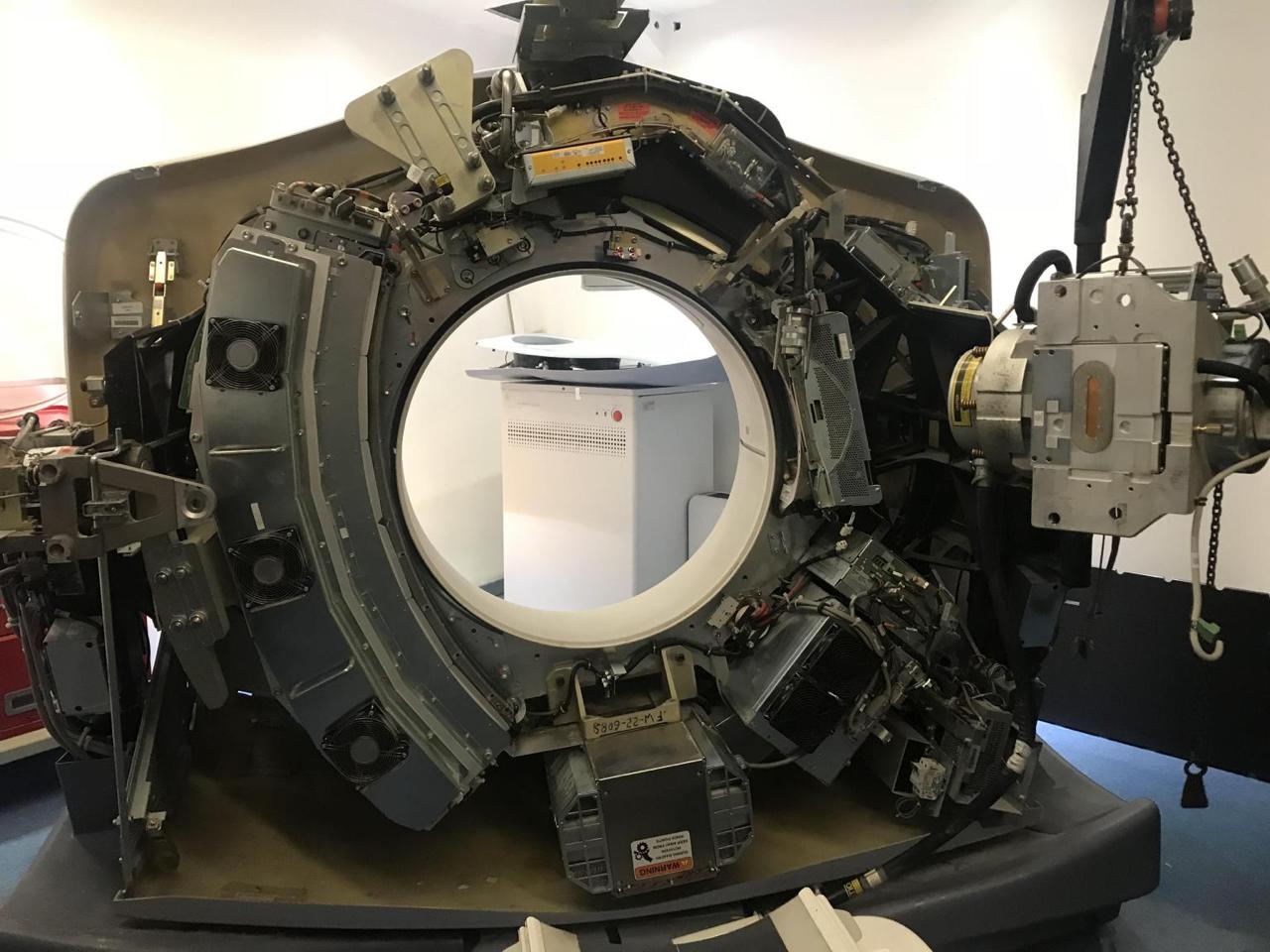
Practical considerations, risk points, and what to ask before you buy, service, move, or maintain imaging equipment.
Considering a lease instead?
Equipment, service, PMs, parts, and applications support can be bundled into one monthly payment.
If this article is about financing, ROI, service contracts, or total cost of ownership, the leasing model may simplify the decision.
A medical imaging equipment service call does not have one fixed cost. The final number usually depends on the modality, location, urgency, labor time, travel, diagnosis, parts, service history, and whether the visit is preventive maintenance, troubleshooting, repair, installation support, or follow-up work. A CT, MRI, PET/CT, X-ray, C-arm, ultrasound, DEXA, or cath lab issue should be quoted from the actual system details. The fastest way to get a useful estimate is to send MIS the make, model, serial number, symptoms, error messages, downtime impact, recent service history, and clear PHI-free photos or screenshots.
That answer may feel less satisfying than a flat rate, but it is the honest one. A real service estimate has to account for the work needed to get the room running safely and reliably.
Why service calls are not all priced the same
Two service calls can look similar from the front desk and be completely different for the engineer. “Our CT is down” could mean a simple workstation issue, a cooling problem, a table fault, a tube-related warning, a generator error, or a deeper intermittent failure that only shows up under load. Those are not the same job.
The same is true across MRI, PET/CT, X-ray, C-arm, ultrasound, DEXA, and cath lab systems. Modality matters because the risk, parts exposure, diagnostic process, and technical skill set are different. A qualified imaging service provider is not just billing for time on site. The value is diagnosis, safe access, correct parts identification, documentation, and knowing when a symptom points to a larger system problem.
The cleaner the intake, the more useful the quote. Before requesting service through MIS services, gather the modality, manufacturer, model, serial number, software level if known, exact error messages, what the operator was doing when the fault happened, and whether the problem is repeatable. If the system is actively down, use the emergency checklist in Emergency Imaging Equipment Repair: What to Do First.
The main factors that drive service call cost
Most imaging equipment service costs come from a handful of practical variables. The first is labor time. A straightforward inspection or preventive maintenance visit may take a predictable block of time. An intermittent fault, image-quality complaint, cooling issue, network problem, or multi-system failure can take longer because the engineer has to reproduce the issue and rule out false leads.
The second factor is urgency. A planned PM visit is easier to schedule than an active downtime call where patients are waiting or a mobile unit route is at risk. Urgency can change travel coordination, parts staging, and after-hours work.
The third factor is travel and site access. A system in a straightforward outpatient suite is different from a hospital room with credentialing requirements, restricted hours, security access, parking constraints, loading dock rules, or infection-control procedures.
The fourth factor is parts. A service visit that ends with documentation and adjustment is not the same as one that needs a CT tube, detector, MRI coil, RF part, gradient component, X-ray generator part, cable, board, workstation, or mechanical assembly. Parts should be identified carefully. Guessing is how facilities pay for parts that do not fix the problem. For parts preparation, read How Do I Know Which Medical Imaging Equipment Parts I Need? or contact the MIS parts team.
PM, troubleshooting, and repair are different visits
Facilities often use “service call” as a catch-all phrase, but the scope matters.
A preventive maintenance visit is scheduled work. It should include inspection, cleaning where appropriate, performance checks, error review, documentation, and recommendations based on the modality and system condition. PM is usually easier to scope because the system is expected to be available for planned maintenance. For a full breakdown, see What Is Included in an Imaging Equipment PM Visit?.
A troubleshooting visit is different. The goal is to find the cause of a symptom: scan aborts, artifacts, cooling alarms, intermittent startup failures, DICOM issues, table movement problems, coil complaints, detector errors, generator faults, or recurring operator workarounds. Troubleshooting can lead to a same-day fix, a parts quote, a follow-up visit, or a recommendation to monitor the issue.
A repair visit is usually more defined. The service team knows what component or corrective action is likely needed, parts may be staged, and the visit is built around restoring function. Even then, imaging equipment can expose secondary issues once the first fault is corrected.
What to send before asking for an estimate
The best way to reduce wasted time is to send a complete service request. Do not send patient identifiers, accession numbers, study screenshots, or anything containing protected health information. Keep the intake technical and operational.
Send the service team:
- Modality, manufacturer, model, serial number, and site location
- Exact symptoms, error messages, and when the issue started
- Whether the system is fully down, intermittent, degraded, artifacting, or still usable
- Photos of nameplates, status screens, visible damage, or error messages with PHI removed
- Recent service notes, PM records, parts replaced, or recurring complaints
- Any recent power, HVAC, chiller, network, construction, software, or room changes
- Current schedule impact, patient volume affected, and urgency
- Site access rules, preferred service window, and onsite contact
That information lets MIS separate a likely parts issue from a site condition, operator workflow issue, PM finding, or true emergency repair.
Common mistakes that make service calls more expensive
The first mistake is waiting until a small warning becomes full downtime. Repeated errors, artifacts, cooling warnings, unusual noise, failed warmups, scan aborts, and intermittent startup issues are not harmless just because the system eventually works.
The second mistake is clearing logs or rebooting repeatedly without documenting the original fault. A reboot may be part of the site’s normal process, but service still needs the error code, timing, and context.
The third mistake is using the wrong service model for the risk. A low-volume backup unit may be fine with time-and-material service plus planned PM. A high-volume CT, MRI, PET/CT, or cath lab room may need a more structured coverage plan. MIS explains the tradeoffs in Medical Imaging Service Contracts: What Facilities Should Compare and supports facilities through service agreements.
When cost should lead to a bigger decision
Not every service call should end with “keep repairing it forever.” If a scanner has repeated downtime, parts are getting harder to source, service costs are climbing, image quality no longer meets clinical needs, or a critical component is approaching a major failure point, the better conversation may be repair versus replacement.
That does not mean replacing the system at the first expensive quote. It means looking at total risk. How much revenue is lost when the room is down? Are parts available from reliable sources? Does the system still match the facility’s clinical needs?
For aging CT and MRI systems, start with When to Replace vs. Repair Your CT or MRI Scanner. If replacement is on the table, MIS can help with refurbished equipment through equipment categories, quote requests, and mobile imaging options through mobile leasing.
FAQ
Can MIS quote a service call without seeing the system?
MIS can often give direction on what information is needed and whether the issue sounds like PM, troubleshooting, repair, parts research, or a replacement conversation. A firm quote depends on the system details, location, scope, urgency, and available documentation.
Is emergency imaging equipment repair more expensive than scheduled service?
Emergency work often costs more because urgency can affect scheduling, travel, after-hours coordination, parts staging, and downtime risk. The exact cost depends on the situation. Planned PM and early troubleshooting are usually easier to control than a room-down event.
What is the cheapest way to reduce service call cost?
Document issues early, keep PM records current, preserve error messages, maintain stable room conditions, and send complete system details before service is scheduled. The cheapest service call is often the one that avoids guesswork.
Should we buy parts before scheduling service?
Only when the part is confidently identified. Many failures look like a parts issue at first and turn out to involve power, cooling, software, calibration, configuration, or another component. If you are unsure, send MIS the part labels, system details, and fault history before ordering.
What should I do if the system is down right now?
Stop unsafe use, preserve error messages, document the system details, remove PHI from any screenshots, and contact a qualified imaging equipment service provider. If you want MIS to triage the next step, send the details through the contact page or service channel.
Schema recommendation
Use Article or BlogPosting schema, FAQPage schema, and Service schema only on approved MIS service pages.
If your CT, MRI, PET/CT, X-ray, C-arm, ultrasound, DEXA, or cath lab system needs service, send MIS the modality, make, model, serial number, symptoms, error messages, urgency, and PHI-free photos through MIS contact. The better the intake, the faster the team can route the right service, parts, PM, quote, or replacement conversation.
Need help with this exact problem?
Send the modality, site location, timeline, and any system details. MIS will route the request by intent.
Related resources
Ops Playbook
What Site Requirements Are Needed for a CT Scanner?
CT scanner site requirements include room fit, power, cooling, shielding review, access, IT, service clearance, and project planning.
Ops Playbook
How Long Does CT Scanner Installation Take? Planning Guide
CT scanner installation timing depends on site readiness, rigging, power, cooling, shielding review, IT, service support, and project scope.
Ops Playbook
How Quickly Can a CT Scanner Be Repaired After Downtime?
CT repair speed depends on diagnosis, parts, access, service history, and site readiness. Learn what helps a scanner get back online faster.