
Ops Playbook
CT Scanner Repair and Maintenance: What Should Your Facility Expect?
July 31, 2026 · 7 min · Medical Imaging Specialists
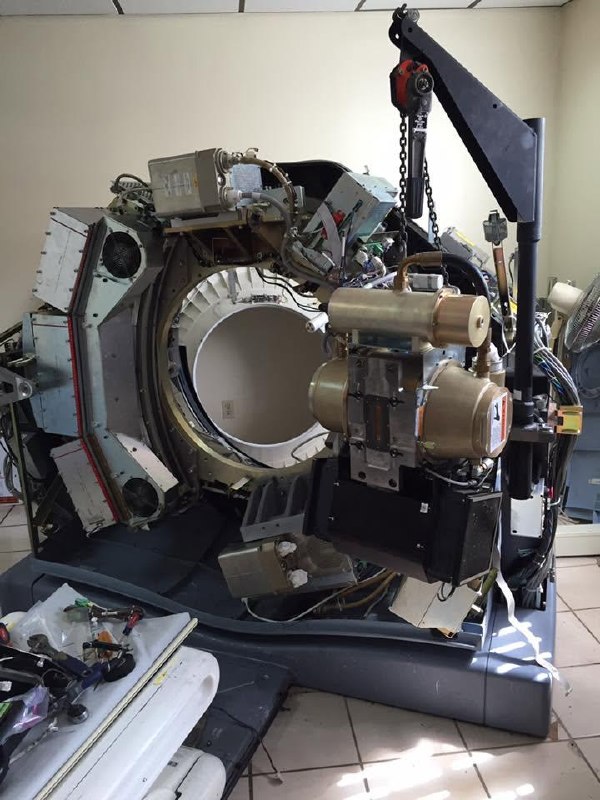
Practical considerations, risk points, and what to ask before you buy, service, move, or maintain imaging equipment.
A professional CT scanner repair and maintenance engagement should start with clear intake, urgency triage, review by qualified service personnel, a documented next step, parts/site-access communication, and service records. Exact timing, diagnosis, testing, and return-to-use steps depend on the CT model, fault, site, parts availability, service arrangement, and facility requirements. Before requesting help, send MIS the manufacturer, model, serial number, PHI-free error text, symptoms, recent service history, location, and downtime status so the team can route the request correctly.
What should a CT repair process include?
CT repair is not just “send a technician.” A useful service process should help the facility understand what is known, what is unknown, who owns the next step, and what information is needed before parts or labor are authorized.
For a Bradenton, Sarasota, Tampa Bay, or Florida imaging center, the operational pressure can be immediate. The schedule is full, referring offices are waiting, and every hour of uncertainty creates more disruption. Guessing at parts or treating an error code as a complete diagnosis can turn one fault into a longer outage.
At a high level, a CT service engagement should include system and symptom intake, urgency and site-access review, qualified diagnostic evaluation or parts review, a written scope or next diagnostic step, communication about approvals and scheduling, and documentation after the work.
MIS supports medical imaging facilities with equipment, service, parts, preventive maintenance, installation, and replacement planning. That matters because CT problems do not always stay in one lane. A repair call can become a parts request, a PM discussion, a site issue, or a replacement conversation.
Repair is different from preventive maintenance
Corrective repair addresses a current problem: the scanner is down, producing errors, creating image-quality issues, overheating, failing calibration, or operating intermittently. Preventive maintenance follows a planned scope intended to inspect, clean, test, document, and reduce avoidable risk before a failure stops the schedule.
Both are important, but they are not interchangeable. A PM visit is not a guaranteed shield against every future failure, and a repair visit is not a full maintenance program. For service-plan context, see MIS guides to medical imaging service contracts and CT and MRI preventive maintenance.
What should you send before requesting CT scanner service?
The fastest useful review starts with clean information. Keep the first request PHI-free and operational: no patient images, worklists, reports, accession details, or patient-identifying material.
Send:
- Manufacturer, model, and serial number.
- System configuration and software level if known.
- Exact error text or screenshots with PHI removed.
- What changed: when the issue started and whether it is intermittent.
- Current status: fully down, scanning with limitations, image-quality concern, cooling concern, table issue, workstation problem, or other symptom.
- Recent PM and repair history.
- Facility location and access constraints.
- Urgency, preferred contact, and approval process.
- Whether a qualified technician has already evaluated the system.
For a deeper intake checklist, see what to send before requesting CT scanner repair service.
How should urgency be triaged?
Every CT problem feels urgent when the scanner is tied to the schedule, but urgency still needs structure. A scanner that is fully down is different from a recurring error that clears after reboot. A cooling alarm is different from a table motion issue. An image artifact is different from a tube warning.
A professional provider should ask enough questions to understand the risk before promising a route. This is operational discipline, not legal or radiation-safety advice: urgency should not erase the need for qualified review and facility-specific decisions.
What happens during qualified evaluation?
During a service evaluation, the technician or service team should be gathering evidence, not guessing. The exact diagnostic steps depend on the CT platform and symptom, but the facility should expect a controlled process: review the issue, inspect relevant areas, confirm contributing site conditions where appropriate, and communicate what is known before parts or larger labor are approved.
Public blog content should not be used as a repair manual for high-voltage, radiation-producing, moving medical equipment. The useful buyer question is not “Can someone tell me how to fix it?” It is “Can this provider explain the diagnostic path, dependencies, and approval step before money moves?”
How should parts be handled?
Parts are often where CT repairs slow down. A tube, detector component, board, power supply, table assembly, fan, cable, workstation, or cooling-related part may need exact compatibility review before ordering. Part numbers, configuration, software level, condition, exchange terms, and warranty boundaries can all matter.
Do not order by guesswork from an error code alone. An error may point to a system area without proving the failed component. A repeated fault may be caused by upstream power, cooling, airflow, calibration, or usage conditions.
MIS supports CT parts requests through the medical imaging parts catalog and CT parts page. For tube-specific risk, review the CT scanner X-ray tube replacement cost guide and CT parts and tube review checklist.
What communication should the facility expect?
Good service communication means a clear owner, clear next step, and clear dependency.
At minimum, the facility should know who the service contact is, what information is still needed, whether the next step is diagnosis or quote approval, what is excluded or still unknown, when a new authorization is needed, and what will be documented after the work.
What documentation should come after CT service?
After a repair or maintenance visit, the facility should receive a service record that is useful later. It should identify the reported issue, findings, work performed, parts used if any, recommendations, unresolved concerns, and the next maintenance step. It should avoid patient information and stay tied to the equipment and service event.
Documentation matters because the next service decision depends on the last one. Repeated issues, skipped PMs, cooling concerns, tube trends, parts lead times, and unresolved site problems should not live only in memory.
When does repair become replacement planning?
Repair is not always the smartest next step. A facility should discuss replacement, resale, or deinstallation when the evidence points beyond one isolated failure.
Watch for:
- Repeat downtime on the same platform.
- Parts that are hard to source or no longer practical.
- Repair spend rising faster than the scanner’s clinical value.
- Software, site, or performance limitations affecting the studies the facility needs to offer.
- A short-term repair that only buys time for a planned replacement.
MIS covers this broader decision in when to replace vs. repair a CT or MRI scanner and should I repair or sell my old CT/MRI system?. If replacement becomes the better path, compare current CT equipment options and involve site planning early with the CT scanner site preparation guide.
Questions to ask any CT service provider
Before approving service, ask whether the provider has supported that manufacturer and model, who performs the work, what information is needed before dispatch or parts review, how part compatibility is confirmed, what the quote includes and excludes, what documentation is provided, and what happens if repair is not the right answer.
The best answer is not always the cheapest first answer. It is the answer that reduces uncertainty and protects the facility’s schedule.
FAQ
How quickly can a CT scanner be repaired?
It depends on the CT model, fault, site, parts availability, access, approvals, and service arrangement. A provider should avoid universal timing promises and explain the next diagnostic or parts step.
Is a CT error code enough to identify the failed part?
Not always. An error code can be useful evidence, but it may not prove the failed component. Qualified review is important before ordering parts or approving repair work.
Should I request a replacement part or a service call?
If the failed part is confirmed and compatibility is clear, a parts request may be appropriate. If the cause is uncertain, the system is down, or the issue touches safety, calibration, motion, cooling, or image quality, request qualified service review.
What should a CT service quote include?
A CT service quote should make the scope clear: labor assumptions, parts if known, travel or site-access assumptions, exclusions, authorization limits, and what happens if diagnosis changes the repair path.
Can MIS help with CT repair, PM, parts, replacement, or deinstallation?
Yes. MIS supports imaging facilities through CT equipment, service, preventive maintenance, parts, installation planning, replacement discussions, and deinstallation or resale conversations. Start with the service page, parts catalog, or quote request depending on the problem.
Need CT scanner service?
Send MIS the manufacturer, model, serial number, system configuration, exact error text with PHI removed, symptoms, recent PM or repair history, downtime status, location, urgency, and whether a technician has already evaluated the system.
MIS can review whether the next step is parts, qualified service, preventive maintenance, replacement equipment, or a sell/deinstallation conversation. For facilities in Bradenton, Sarasota, Tampa Bay, across Florida, or outside the state, start by getting the right system information in front of the right service team.
Need help with this exact problem?
Send the modality, site location, timeline, and any system details. MIS will route the request by intent.
Related resources
Ops Playbook
What Does a CT Scanner Service Contract Cover?
Learn what a CT scanner service contract may cover, whether the X-ray tube is included, and which exclusions to review before signing.
Ops Playbook
What Should You Send Before Asking MIS to Review an X-Ray System?
Need help deciding whether to service, source parts for, replace, or retire an X-ray system? Send these details before asking MIS for a review.
Ops Playbook
Can an Older X-Ray Room Be Upgraded to DR?
An older X-ray room may be a DR upgrade candidate, but compatibility, workflow, serviceability, and lifecycle risk should be checked before buying a detector.