
Ops Playbook
What Should I Send for a CT Scanner Parts or Tube Replacement Review?
July 24, 2026 · 7 min · Medical Imaging Specialists
Practical considerations, risk points, and what to ask before you buy, service, move, or maintain imaging equipment.
For a CT scanner parts or tube replacement review, send the manufacturer, exact model, serial number, software level if known, tube or part number if safely available, error codes, symptom history, tube usage data, recent service records, site location, downtime status, and PHI-free photos or screenshots. A CT tube error does not always mean the tube is the only problem. Clean intake helps Medical Imaging Specialists route the request toward parts, tube review, field service, preventive maintenance, or replacement planning.
The goal: give the service or parts team enough evidence to stop guessing.
Why CT parts and tube requests need better intake
CT scanners are configuration-sensitive. Two units can share a brand and slice count but use different tubes, detector assemblies, gantry electronics, power supplies, software levels, workstations, or hardware revisions. “GE 64-slice CT tube” or “Siemens board” is not enough to quote with confidence.
That matters most when the scanner is down. A wrong part can add days of downtime, extra freight, repeat labor, and another round of diagnosis. A vague request also makes it harder to tell whether the facility needs a part, a technician, PM follow-up, or repair-versus-replacement review.
If your team is still deciding whether the issue is service or parts, start with MIS’s guide on what to send before requesting CT scanner repair service. If the request is parts-focused, the broader medical imaging parts quote checklist is a useful companion.
The core CT scanner details to send first
Start with system identity. It prevents compatibility mistakes.
Send:
- CT manufacturer and exact model
- System serial number
- Facility location, city, state or country
- Room number or scanner identifier
- Software level if your team can find it safely
- Current service provider, if applicable
- Whether the system is down, intermittent, degraded, or still scanning
- Best technical contact for follow-up questions
The serial number is especially important. Part compatibility may depend on configuration, revision, date range, tube option, detector type, console generation, and service history. A facility asset tag helps internally, but MIS still needs the OEM system identity.
For planning beyond the immediate issue, MIS also supports CT equipment, medical imaging service, service agreements, and medical imaging parts. Those paths overlap when an aging scanner starts producing repeat failures.
What to send for a CT tube replacement review
Tube requests deserve extra care because the tube is one of the highest-risk CT components. Before assuming the tube is bad, send the evidence behind the concern.
Useful tube-review information includes:
- Exact tube error codes or warning messages
- Photos of error screens or service messages
- Tube model or part number if visible and safely accessible
- Tube install date if known
- Scan seconds, mAs, exposure count, or tube usage indicators if available
- Recent warmup failures, arcing events, aborted scans, or cooling alarms
- Whether symptoms appear under high-demand protocols or during routine scans
- Recent power, HVAC, chiller, cooling, generator, or PM events
- Any prior quote, PM note, or service report that mentioned tube risk
A CT tube fault can involve the tube, generator, cooling path, high-voltage cables, calibration, power quality, gantry electronics, or related components. A qualified review should look at the pattern, not only the headline error. MIS covers failure drivers in what causes CT tube failure and the budget side in CT scanner X-ray tube replacement cost.
Photos and screenshots that help without exposing PHI
Good visuals shorten the review, but they need to be clean.
Send photos or screenshots of:
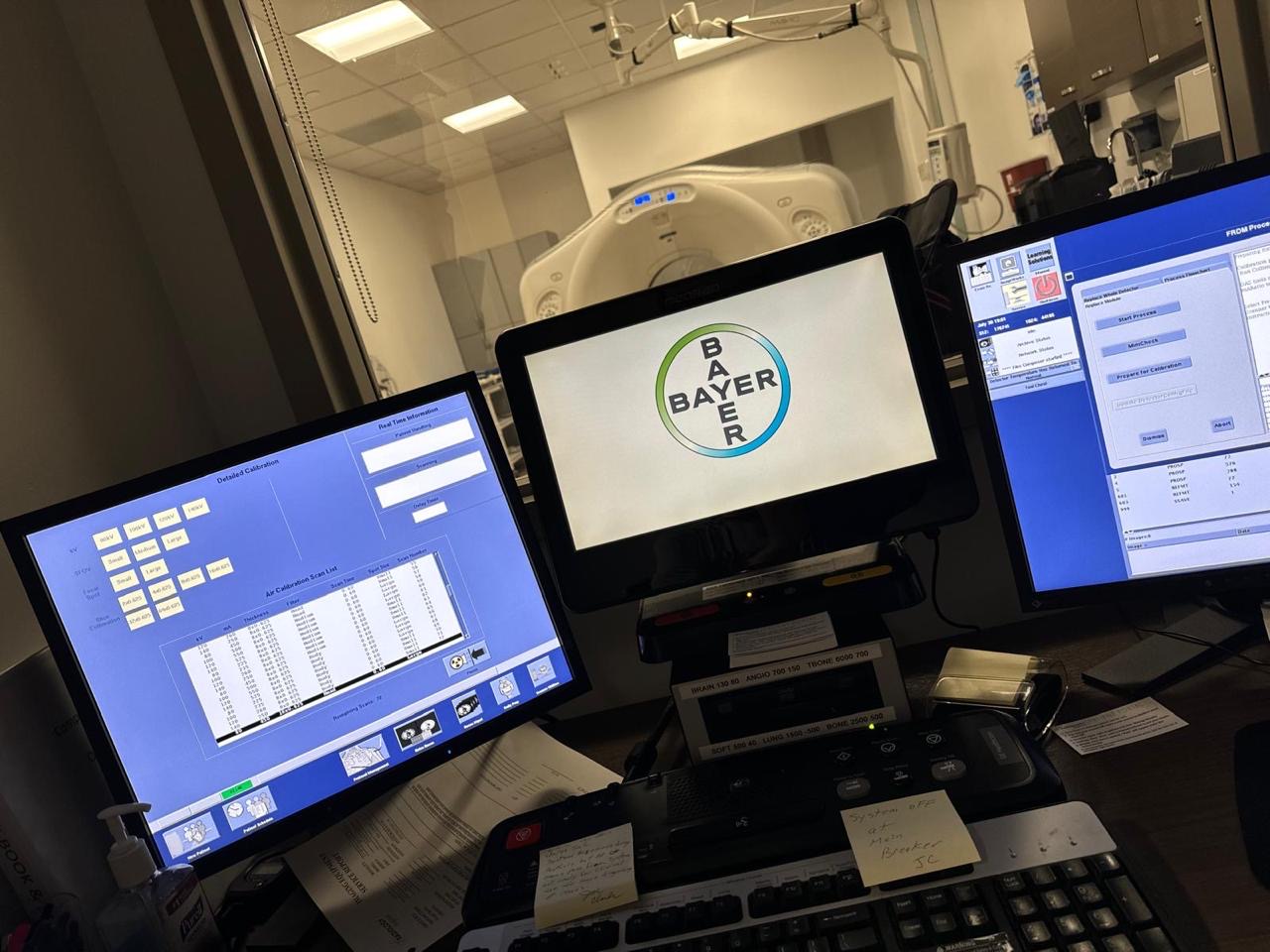
- Console error messages
- System status pages
- Tube or component labels, when safely accessible
- Gantry, table, or cabinet labels
- Visible damage, leaks, wear, or loose external components
- Image artifacts only if all patient information is removed
- Environmental clues such as blocked airflow, room temperature alarms, or obvious construction dust
Do not send patient names, dates of birth, accession numbers, schedules, worklists, reports, exam images, credentials, passwords, or protected health information. MIS needs equipment evidence, not patient data.
Also avoid removing covers or accessing internal components unless your staff is qualified and authorized. If the label is not safely accessible, say so. A missing label is better than a risky photo.
Service history can change the answer
Recent history often explains whether the path is a replacement part, service diagnosis, or broader review.
Tell MIS if the scanner recently had:
- Preventive maintenance
- Tube replacement
- Generator, detector, table, gantry, or workstation work
- Power outage, storm, generator transfer, or electrical repair
- HVAC or room-temperature problems
- Network, PACS, DICOM, or worklist changes
- Software update or console replacement
- Relocation, rigging, construction, or room renovation
- Repeat faults that were cleared but not fully resolved
That context can prevent blind parts swapping. A tube warning after a cooling event is different from one on a system with high scan seconds and repeated warmup failures. A detector fault after construction dust or power instability deserves a different path than a clean, diagnosed detector failure.
When a parts quote should become service triage
Some requests can move directly to parts. If a qualified engineer has diagnosed the failed component, the serial number is available, the part label is clear, and the configuration is known, MIS can usually review the quote path quickly.
Other requests should become service triage first. That includes:
- Error codes that point to multiple possible causes
- Repeat failures after several parts have already been changed
- Tube, generator, detector, cooling, or high-voltage concerns without a confirmed diagnosis
- Safety warnings, unusual motion, overheating, smoke, smell, or repeated shutdowns
- Image-quality problems where the failed component is not confirmed
- Workflow problems that may involve workstation, network, PACS, or DICOM routing
The fastest responsible answer may be “we need more diagnosis before ordering hardware.” That protects the facility from buying the wrong expensive component.
What the review should help decide
A good CT parts or tube review should not end at “here is a price.” It should help the facility choose an operational path.
The likely outcomes are:
- Quote the confirmed part
- Send a qualified engineer for diagnosis
- Schedule PM or follow-up service
- Plan a CT tube replacement
- Compare repair against refurbished CT replacement
- Review temporary or mobile capacity if downtime risk is high
- Deinstall, trade, sell, or harvest an aging system if repair no longer pencils out
That matters because a major tube or detector quote can become a decision point. If the CT has strong service history, available parts, and good clinical fit, repair may be right. If the scanner is aging, hard to support, and creating repeated outages, read when to replace vs. repair a CT or MRI scanner before treating a major parts quote as automatic.
FAQ
What should I send for a CT scanner parts review?
Send the CT manufacturer, exact model, serial number, part number if known, PHI-free photos, error codes, symptoms, service history, site location, urgency, and whether a qualified engineer has confirmed the failed component.
What should I send for a CT tube replacement review?
Send the scanner model and serial number, tube model if available, error messages, tube usage data, install date if known, scan symptoms, cooling or warmup issues, recent service records, and whether the scanner is down or still operating.
Does a CT tube error always mean the tube needs replacement?
No. Tube-related symptoms can involve the tube, generator, cooling system, high-voltage path, calibration, power, cabling, or related electronics. The error should be reviewed with service history and system data before ordering a tube.
Can MIS quote a CT part from a photo?
Sometimes, but a photo alone is rarely enough. MIS still needs the system model, serial number, configuration, part label details, diagnosis status, and failure context to reduce compatibility risk.
Should we remove covers to find a part number?
No, not unless your staff is qualified and authorized to access that area safely. Send what is safely visible and explain what you cannot access. Service support may be the better next step.
What records should we keep after a major part review?
Keep the quote, diagnosis notes, error screenshots, service report, replacement part details, warranty terms if applicable, calibration or QA documentation when performed, and any follow-up recommendations.
Schema recommendation
Use Article or BlogPosting schema for this post and FAQPage schema for the FAQ section. BreadcrumbList is appropriate if supported by the site template. Do not use HowTo schema because this article is intake guidance, not DIY CT repair or tube replacement instruction. Avoid price, availability, warranty, rating, or offer markup unless MIS has approved current live data.
Need a CT parts or tube replacement review? Send MIS the system details, error evidence, service history, urgency, and PHI-free photos through medical imaging parts, service, or contact so the team can route the request toward the right next step.
Need help with this exact problem?
Send the modality, site location, timeline, and any system details. MIS will route the request by intent.
Related resources
Ops Playbook
What Does a CT Scanner Service Contract Cover?
Learn what a CT scanner service contract may cover, whether the X-ray tube is included, and which exclusions to review before signing.
Ops Playbook
What Should You Send Before Asking MIS to Review an X-Ray System?
Need help deciding whether to service, source parts for, replace, or retire an X-ray system? Send these details before asking MIS for a review.
Ops Playbook
Can an Older X-Ray Room Be Upgraded to DR?
An older X-ray room may be a DR upgrade candidate, but compatibility, workflow, serviceability, and lifecycle risk should be checked before buying a detector.