
Buyer's Desk
What Is a Fair Price for Used X-Ray Equipment?
July 8, 2026 · 7 min · Medical Imaging Specialists
Practical considerations, risk points, and what to ask before you buy, service, move, or maintain imaging equipment.
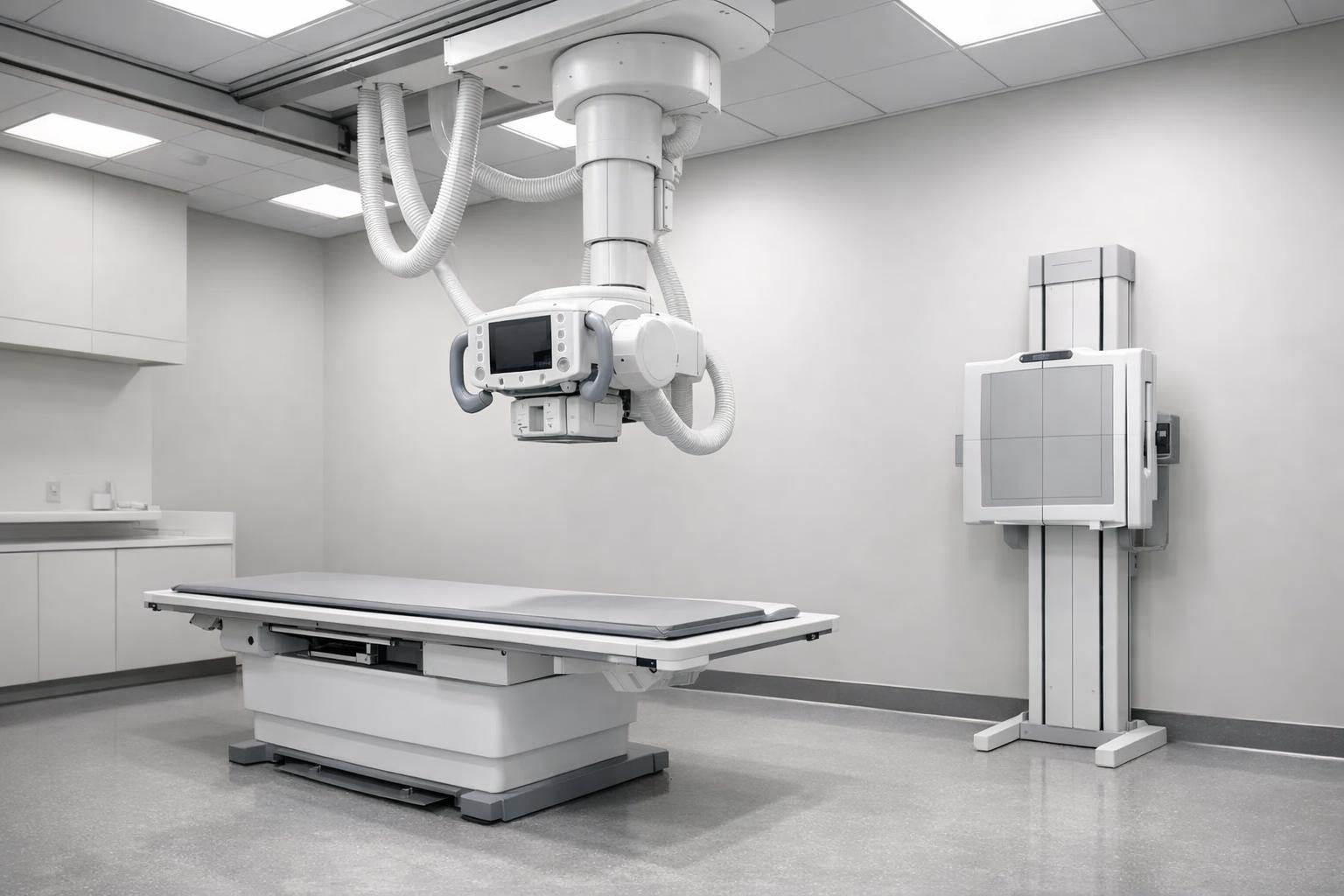
A fair price for used X-ray equipment matches the complete scope: system type, detector and workstation condition, included components, testing, installation support, freight, room readiness, software, parts availability, and service after delivery. A low hardware number is not fair if the quote excludes the detector, cables, workstation, startup support, or a realistic service path. Compare total installed risk, not the cheapest line item.
“Used X-ray equipment” can mean a portable unit, fixed DR room, C-arm, R&F system, DEXA system, detector upgrade, or partial replacement project. Each prices differently.
Start by defining what you are actually buying
The first step in judging a used X-ray price is separating the equipment category from the project scope. A fixed radiography room is not the same purchase as a portable X-ray machine. A used room with a functioning detector and workstation is not the same as a room missing its digital path. A C-arm has a different value equation than a wall stand and generator package.
Before judging the price, confirm what the quote includes:
- X-ray tube, generator, collimator, table, wall stand, tube stand, detector, workstation, software, cables, and accessories
- DICOM/PACS capability, licensing details, deinstallation, crating, freight, delivery, installation support, and startup help
- Testing records, service history, known faults, and what has been refurbished
- Warranty, service agreement, preventive maintenance, parts support, and exclusions
If those items are not clear, the price is not ready to judge. The risk is not priced honestly.
For more context, compare this with How Much Does Used X-Ray Equipment Cost? and the used X-ray buying checklist.
A fair price is based on usable clinical value
Fair market value is not just age plus brand name. The better question is whether the equipment can do the clinical work without creating avoidable downtime, workflow bottlenecks, or surprise costs.
For an orthopedic practice, detector speed, image quality, table movement, and PACS routing may matter more than lowest hardware cost. For an urgent care center, reliability, simple workflow, service access, and fast startup may carry the value. For a hospital replacement room, compatibility, uptime, service documentation, and parts path may matter more than cosmetic condition.
Used equipment may be priced lower because the buyer accepts more responsibility for inspection, missing components, installation, and service planning. Refurbished equipment should cost more because the seller has done more work: inspection, repairs where needed, cleaning, configuration, testing, documentation, and project coordination.
The word “refurbished” should never be accepted on faith. Ask what was actually done. A fair refurbished price should come with a process you can understand.
The detector and workstation can change the value fast
In a digital X-ray room, the detector and workstation often drive more value than the steel. A room with a reliable DR detector, usable workstation, current workflow, and clean DICOM routing may be worth more than a cheaper room that needs a detector plan after delivery.
Ask direct questions:
- What detector is included, and what is its condition?
- Is the workstation included and functional?
- What software version is on the system?
- Does the workstation support your PACS, RIS, or modality worklist needs?
- Are cables, chargers, interface boxes, batteries, grids, and accessories included?
- What happens if the detector fails before installation?
A used X-ray system with a weak detector path can become expensive quickly. A “cheap” room that needs a detector, workstation, software help, and troubleshooting may not be cheap at all.
For a component-level view, read What Parts Do X-Ray Machines Need to Work Properly?. For parts planning, MIS can help through /parts.
Site readiness belongs in the price conversation
Used X-ray pricing is only fair if it matches the room. Even a good system can become a bad buy if it does not fit the facility, electrical setup, workflow, access path, or local review process.
Site factors that affect real project cost include room dimensions, ceiling height, control area, delivery path, door clearances, flooring, power, shielding review, workstation location, network drops, and service access.
Replacement rooms are not automatically simple. A new system may require different anchoring, cable paths, generator placement, detector workflow, software configuration, or network setup. Portable systems reduce some construction issues, but still need charging, storage, detector handling, service access, and image routing.
Use the X-ray equipment site requirements guide before committing. MIS can help evaluate equipment fit and project scope, but final electrical, construction, shielding, and local compliance decisions should be confirmed with qualified professionals and local authorities.
Compare total installed scope, not quote totals
Two quotes can have the same title and completely different risk. One may include a tested system, detector, workstation, freight coordination, installation support, and service plan. Another may be equipment-only, as-is, with missing accessories and no post-install support.
To compare fairly, line the quotes up by scope:
- Condition: as-is, used-tested, refurbished, or parts-only
- Full component list and missing items
- Detector and workstation status
- Software, DICOM, and network expectations
- Freight, crating, rigging, delivery, installation, startup, and testing support
- PM, service agreement, parts path, and response expectations
- Warranty or service exclusions
This is where a lower number can be misleading. If Quote A includes the pieces that make the room operational and Quote B leaves them out, Quote B may just be a deferred-cost quote.
For related risk checks, see Hidden Costs When Buying Used X-Ray Equipment.
Common mistakes when judging used X-ray price
The most common mistake is shopping by hardware price before defining the room. A buyer sees a low number, then discovers missing detector hardware, unsupported software, unavailable cables, freight costs, or installation gaps.
The second mistake is assuming “working when removed” is enough. It is useful, but it does not replace service history, photos, testing, current condition, included parts, and a support plan.
The third mistake is ignoring year-two service. A system can start up cleanly and still be a poor buy if parts are scarce or no qualified service path exists in the region. A fair price should reflect supportability.
The fourth mistake is sending patient information during quote intake. Do not send screenshots, reports, schedules, accession numbers, demographics, image previews, or labels that contain PHI. Room photos, equipment labels, serial plates, and component photos are useful, but check them before sharing.
What to send MIS for a fair X-ray quote
The cleanest way to get a realistic used X-ray quote is to send enough project context up front. Include facility location, clinical use case, expected volume, current equipment if replacing a room, desired system type, photos, rough room dimensions, access-path notes, detector/workstation needs, PACS or worklist requirements, timeline, service expectations, and budget constraints.
If the facility is open to used, refurbished, or new options, say that. If the priority is lowest workable capital cost, say that. If uptime and support matter more than lowest price, say that too.
MIS sells and supports X-ray and other medical imaging equipment, so the goal is not just to quote a machine. It is to match the system to the room, workflow, logistics, parts path, and service plan. Start with /equipment/x-ray-equipment or request a scoped review through /quote. For support after purchase, review /services.
FAQ
Is the lowest used X-ray quote ever the fair price?
Sometimes, but only when the scope is complete and the risk is understood. If the lowest quote excludes detector hardware, workstation, installation support, freight, service, or missing accessories, it may not be the lowest real project cost.
Is refurbished X-ray equipment worth paying more for?
Often, yes, when the refurbishment is documented. Inspection, testing, replacement of failed or worn components, cleaning, configuration, and support planning can reduce buyer risk. The important question is what work was actually performed.
What affects used X-ray equipment value the most?
System type, detector condition, workstation/software status, included components, testing records, service history, site fit, parts availability, and support after installation usually drive value more than age alone.
Should I buy used X-ray equipment as-is?
As-is can make sense for experienced buyers, parts buyers, or projects with internal technical support. For most clinical facilities, as-is equipment needs careful inspection and a clear plan for missing parts, startup, service, and downtime risk.
Can MIS help compare used X-ray quotes?
MIS can review equipment scope, included components, serviceability, parts path, logistics, and support options. Electrical, shielding, construction, and local compliance decisions should still be handled by the facility’s qualified professionals and authorities.
Schema recommendation
Use Article or BlogPosting schema for the post and FAQPage schema for the FAQ section. If the page links to X-ray equipment categories or service pages, Service schema may be appropriate for those destination pages. Avoid Offer, price, availability, warranty, or installation-guarantee schema unless approved inventory and commercial terms are available.
Planning a used X-ray purchase? Send MIS the equipment scope, room details, detector/workstation needs, service expectations, and timeline through /quote so the team can help separate a fair price from a cheap quote with expensive gaps.
Need help with this exact problem?
Send the modality, site location, timeline, and any system details. MIS will route the request by intent.
Related resources
Buyer's Desk
How Much Does Used Medical Imaging Equipment Cost?
Used medical imaging equipment cost depends on modality, model, condition, site work, installation, service, parts, and support scope.
Buyer's Desk
Best Used MRI for an Outpatient Imaging Center
Choose the right used MRI for an outpatient center by matching field strength, bore size, coils, site needs, service, and volume.
Buyer's Desk
Used vs Refurbished PET/CT: What Buyers Should Ask
Used, refurbished, tested, and as-is PET/CT quotes are not equal. Learn what buyers should verify before comparing systems.