
Buyer's Desk
Best Used MRI for an Outpatient Imaging Center
July 4, 2026 · 6 min · Medical Imaging Specialists
Practical considerations, risk points, and what to ask before you buy, service, move, or maintain imaging equipment.
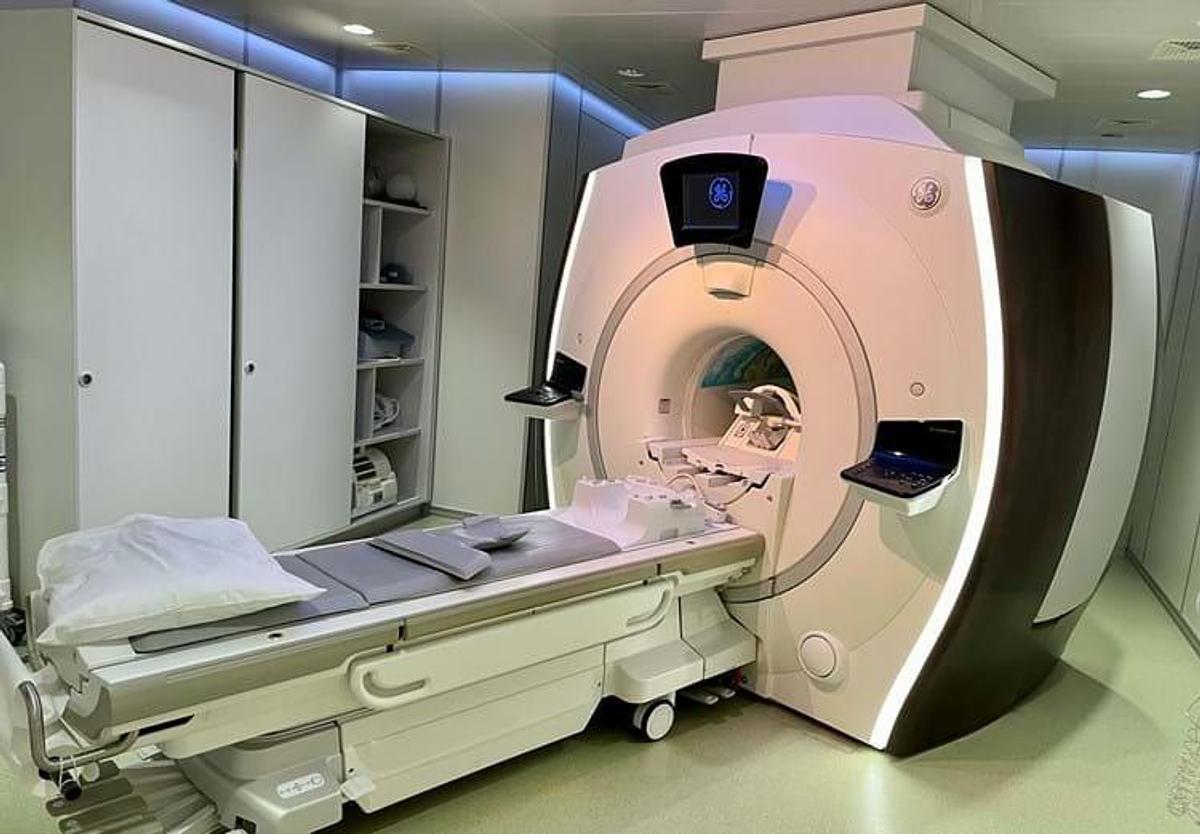
The best used MRI for an outpatient imaging center is usually a serviceable 1.5T system with the right bore size, coil package, software options, site fit, and parts support for the studies the center actually performs. For many outpatient facilities, a refurbished wide-bore 1.5T MRI is the practical sweet spot: strong clinical utility, better patient access than older narrow-bore systems, broader service support than niche platforms, and a lower project cost than many 3T installations. The right answer still depends on exam mix, patient volume, room conditions, budget, and uptime expectations.
Start with the scans, not the brand
The first mistake is shopping for a used MRI by brand name alone. GE, Siemens, Philips, Canon, Hitachi/Fujifilm, and other platforms can all make sense in the right setting. The better question is what the outpatient center needs the magnet to do every week.
Start with the projected exam mix. A general outpatient center may need brain, spine, extremity, abdomen, pelvis, MSK, and contrast-capable work. An orthopedic-heavy center may care more about MSK coils, table workflow, extremity positioning, and patient throughput. A center trying to attract larger or claustrophobic patients may place a premium on bore size and room layout.
The “best” used MRI is rarely the newest-looking system in a listing. It is the system that matches the clinical work, can be sited correctly, has service support behind it, and does not create a hidden project problem after the purchase order is signed. If you are still framing the acquisition, start with MIS’s refurbished MRI scanner buying guide and available MRI equipment options.
Why 1.5T is often the outpatient workhorse
For most outpatient imaging centers, 1.5T is the baseline to evaluate first. It handles a wide range of routine diagnostic studies, is familiar to radiologists and technologists, and usually has a deeper used-equipment and service ecosystem than more specialized systems.
A 3T MRI can be the right choice for certain neuro, MSK, vascular, research, or high-end specialty workflows, but it is not automatically better for every outpatient business case. It can bring higher acquisition cost, site demands, service complexity, and protocol considerations. If the center does not have the referral base, applications need, staff experience, or reimbursement strategy to use the added capability, 3T can become an expensive trophy instead of a productive asset.
Low-field and open MRI systems have their place too, especially for patient comfort or certain orthopedic workflows. The tradeoff is that image quality, scan time, protocol range, and radiologist preference need to be reviewed carefully.
For a deeper comparison, see 1.5T vs 3T refurbished MRI and open MRI vs closed bore MRI.
Bore size, table limits, and patient workflow matter
Outpatient MRI is not just a magnet decision. It is a patient-flow decision.
Older 60 cm bore systems can still be useful when the price, condition, and patient population fit. But many outpatient buyers prefer wide-bore 1.5T systems because patient comfort, access, and referral confidence matter. A wider bore can reduce claustrophobia issues, improve positioning flexibility, and help a center serve a broader patient population.
Do not stop at bore diameter. Review table limits, coil condition, patient pads, communication systems, injector compatibility, room access, and technologist workflow. A used MRI quote should identify included accessories and coils.
The practical checklist is simple: confirm the studies you plan to perform, confirm the coils and software needed for those studies, confirm the system can handle your patient population, and confirm the room can support the platform without a costly surprise.
Site requirements can decide the deal
An outpatient center should never buy a used MRI before reviewing the site. MRI projects involve room size, ceiling height, floor loading, access path, rigging route, RF shielding, magnetic shielding where needed, power, HVAC, cooling, quench path, and local professional review.
The same system that makes sense in one building can be a bad fit in another. A difficult rigging route, weak mechanical room, tight slab, old shielding, poor cooling capacity, or bad access path can change the project economics fast. If the center is replacing an existing MRI, the old room still needs review.
This is where a full-service equipment partner earns its keep. MIS looks at equipment, deinstallation, logistics, installation planning, serviceability, and parts support as connected decisions. A cheap scanner that is hard to move, hard to cool, hard to shield, or hard to service is not cheap by the time it reaches first patient scan.
For more planning context, read used MRI site requirements before buying and MRI site planning: RF shielding, cryogens, and room requirements.
Compare refurbished, tested, and as-is systems carefully
“Used MRI” can mean several different things. A refurbished system should come with a clear scope of work: what was inspected, replaced, cleaned, calibrated, tested, documented, and included. A tested working pull may have been operating before removal but may not include the same process or support. An as-is system carries more risk for a center that needs dependable clinical uptime.
When comparing quotes, ask what is included: magnet, gradients, RF chain, cabinets, computer hardware, table, coils, chiller interface, accessories, software level, licensed options, deinstallation, rigging, freight, installation, applications support, service response, and parts availability.
If two MRI quotes are far apart, they may not be quoting the same scope. Compare the whole project, not only the magnet price.
Service and parts support should be part of the buying decision
Outpatient centers live on uptime. A scanner that is down for a week creates canceled appointments, referral frustration, staff rescheduling, lost revenue, and patient leakage to competitors.
Before choosing a used MRI, ask how serviceable the platform is in your region. Are parts still obtainable? Are coils, boards, computers, table parts, and chiller-related parts supportable? Is there field-service experience outside the OEM? Are there age-related concerns to budget for?
Service history matters too. A magnet with clean documentation and stable operation is different from a system with incomplete records, recurring cooling issues, or unknown fault history.
MIS supports equipment buyers through service, parts, service agreements, and quote planning because those decisions overlap. The right MRI purchase is the one your facility can keep running.
What to send before requesting a used MRI quote
The cleaner the request, the better the quote.
Before requesting a used or refurbished MRI quote, gather:
- Target field strength: 1.5T, 3T, open, or unsure
- Expected exam mix and daily or weekly volume
- Patient population concerns, including bore preference and table needs
- Required coils, software options, and applications
- Facility location and whether the room is new, replacement, or mobile
- Site status, drawings or room photos, timeline, and first patient scan target
- Service expectations after installation
- Budget context, financing or leasing needs, and existing MRI details if replacing a system
Do not send patient information in screenshots, schedules, reports, images, logs, or documents.
Common mistakes outpatient buyers make
The most common mistake is chasing the lowest equipment price without pricing the full project. MRI is not a palletized commodity; the project includes site review, logistics, installation, cooling, shielding, coils, software, service, and long-term support.
The second mistake is overbuying. A 3T system may sound impressive, but if the center mainly performs routine outpatient studies, the business case may be weaker than a well-supported 1.5T. The third is underbuying patient comfort. A narrow-bore system may be cheaper, but if patient size, claustrophobia, or referral expectations point toward wide-bore access, the savings may disappear. Serviceability, parts availability, and PM planning should also be reviewed before purchase.
FAQ
Is a 1.5T MRI enough for an outpatient imaging center?
Often, yes. A 1.5T MRI is the workhorse for many outpatient centers because it supports a broad range of routine diagnostic studies and usually has strong service and parts support. The right choice still depends on exam mix, radiologist requirements, referral base, and patient volume.
What is the difference between used and refurbished MRI?
A used MRI may be a working system removed from another site. A refurbished MRI should have a defined inspection, reconditioning, testing, documentation, and support scope. Ask exactly what work was performed and what is included.
Can MIS help with MRI equipment, installation, service, and parts?
Yes. MIS can help evaluate refurbished MRI options, site fit, deinstallation and logistics, installation planning, service, parts, and ongoing support. The best starting point is a scoped MRI quote request with facility details and project timing.
Schema recommendation
Use Article or BlogPosting for the main post and FAQPage for the FAQ section. If the page links to specific MRI listings, use Product schema only where real model, condition, availability, and approved listing details exist.
Planning a used MRI purchase for an outpatient center? Start with MRI equipment, request a scoped quote, or contact MIS with your exam mix, preferred field strength, site status, location, timeline, and service expectations so the team can help narrow the right options.
Need help with this exact problem?
Send the modality, site location, timeline, and any system details. MIS will route the request by intent.
Related resources
Buyer's Desk
What Is a Fair Price for Used X-Ray Equipment?
A fair used X-ray equipment price depends on scope, detector condition, site readiness, installation, service, parts, and support.
Buyer's Desk
How Much Does Used Medical Imaging Equipment Cost?
Used medical imaging equipment cost depends on modality, model, condition, site work, installation, service, parts, and support scope.
Buyer's Desk
Used vs Refurbished PET/CT: What Buyers Should Ask
Used, refurbished, tested, and as-is PET/CT quotes are not equal. Learn what buyers should verify before comparing systems.