
Ops Playbook
What Causes MRI Chiller Issues and Uptime Problems?
June 9, 2026 · 6 min · Medical Imaging Specialists
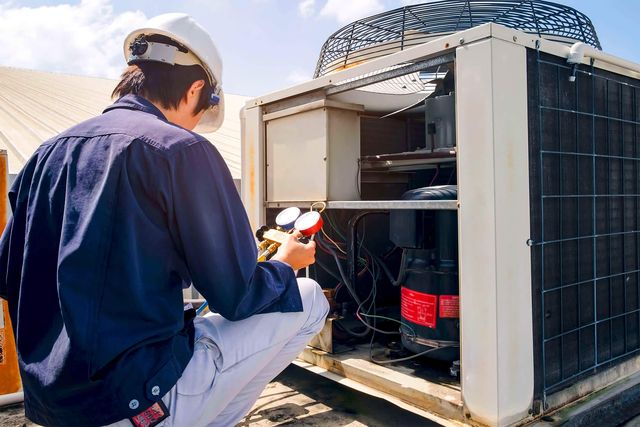
Practical considerations, risk points, and what to ask before you buy, service, move, or maintain imaging equipment.
MRI chiller issues are usually caused by poor heat rejection, low or restricted coolant flow, dirty filters or coils, weak pumps, room temperature problems, aging components, skipped maintenance, or alarms that were cleared without diagnosis. The exact cause depends on the MRI model, chiller type, installation, site conditions, and service history. If an MRI chiller is alarming, drifting, leaking, short-cycling, or struggling to hold temperature, the facility should treat it as an uptime problem, not a nuisance alarm.
The chiller is not just an accessory sitting outside the scan room. For many MRI sites, it is part of the system’s thermal stability plan. When cooling becomes unreliable, scan schedules, image quality, service costs, and magnet-related risk planning can all get pulled into the same conversation.
Why MRI chiller problems deserve fast attention
MRI systems generate and manage heat across several subsystems, and the cooling path has to keep up with the actual workload at the site. A facility running a full outpatient schedule has different risk than a lightly used backup unit. A room in Florida with heavy HVAC load has different risk than a stable, well-controlled suite with clean mechanical space and regular maintenance.
The mistake is assuming the scanner is fine because it still completes studies. Chiller problems often show up in stages: a warning that clears, longer recovery time, intermittent temperature drift, nuisance shutdowns, water-flow messages, unusual noise, visible condensation, or operator workarounds that become normal. By the time the MRI is fully down, the service call is usually more expensive and more disruptive.
That is why MRI cooling belongs in the same uptime conversation as MRI preventive maintenance, service history, room conditions, parts planning, and backup capacity. Preventive maintenance cannot prevent every failure, but it should make cooling risk visible before the system forces the issue.
Common causes of MRI chiller issues
The first category is airflow and heat rejection. A chiller with blocked airflow, dirty coils, poor ventilation, hot mechanical-room conditions, or insufficient clearance may run harder than it should. If the equipment cannot reject heat efficiently, the MRI may see unstable cooling even when the chiller technically powers on.
The second category is coolant flow. Restrictions, clogged strainers, dirty filters, weak pumps, low fluid level, air in the loop, valve problems, or aging hoses can reduce flow. Flow problems may appear as intermittent alarms, temperature instability, or cooling performance that changes during heavier scan blocks.
The third category is component wear. Compressors, pumps, fans, sensors, control boards, relays, valves, and heat exchangers age like any other mechanical and electrical system. A chiller can look acceptable during a light day and struggle when the MRI schedule gets busy.
The fourth category is site environment. HVAC, humidity, dust, water quality, power quality, outdoor temperature, roof or pad placement, and maintenance access all matter. An MRI chiller installed in a poor environment may develop repeat problems even after individual parts are replaced.
For facilities still setting their service rhythm, MIS covers the larger planning question in how often medical imaging equipment should be serviced.
Warning signs facilities should not ignore
An MRI chiller problem does not always announce itself with a hard shutdown. Watch for recurring temperature warnings, flow alarms, pressure changes, longer-than-normal recovery, short cycling, unusual fan or pump noise, visible leaks, corrosion, ice, condensation, vibration, burning smells, or any operator report that the MRI behaves differently during heavy volume.
The service team should also look at timing. Does the alarm happen late in the day? During certain sequences? After room temperature rises? After storms or power events? After filters were changed? After a relocation or refurbishment? Patterns matter because they separate random nuisance alarms from a real cooling trend.
Facilities should not keep clearing the same alarm just to finish the schedule. That may be understandable during a busy day, but the pattern needs to be documented and reviewed. A repeated warning is useful evidence if it reaches the engineer before the system is down.
If the MRI is already affecting patient flow, start with MIS’s emergency imaging equipment repair checklist and route the request through medical imaging service.
What to send before requesting MRI service
The fastest service call starts with clean information. Send the modality, manufacturer, model, serial number, site location, chiller make/model if available, last PM date, current symptoms, alarm text or codes, when the issue started, and whether the MRI is still scanning. Include what changed recently: PM, filter work, HVAC work, construction, power events, schedule increase, relocation, or prior service.
Photos can help, but keep them PHI-safe. Do not send patient names, dates of birth, accession numbers, images, or screenshots with protected health information. Useful photos might show the chiller area, visible leak, alarm screen with no patient data, filters, gauges, clearance, blocked airflow, or environmental conditions around the unit.
If a part may be needed, the service diagnosis should come before guessing. MRI cooling problems can look similar from the operator console while coming from different causes in the field. MIS’s medical imaging equipment parts team can support parts sourcing, but ordering without diagnosis can waste days and leave the room down.
How chiller findings affect repair or replacement decisions
Not every chiller issue means the MRI needs major work. Some problems are maintenance or environment related. Others point to aging equipment, poor installation, repeated component failure, or a cooling setup that no longer matches the scanner’s workload.
Good documentation helps leadership decide whether to repair the chiller, change the PM schedule, address HVAC or mechanical-room conditions, source spare parts, upgrade cooling equipment, or plan for scanner replacement. A repeat cooling problem on an older MRI should also feed the broader repair-versus-replace conversation. MIS covers that framework in when to replace vs. repair CT or MRI equipment.
This is where service, parts, leasing, and equipment planning should not be separated. If the site cannot tolerate another outage, temporary capacity through mobile imaging leasing, a refurbished MRI quote through equipment quotes, or a service agreement through service agreements may be part of the same practical plan.
Common mistakes with MRI cooling problems
The first mistake is treating the chiller as outside the MRI service plan. If cooling is unstable, the MRI is at risk. The chiller, room conditions, workload, service history, and scanner behavior all need to be considered together.
The second mistake is replacing parts without documenting the pattern. A failed pump or sensor may be real, but if airflow, water quality, heat load, clearance, or PM history caused the stress, the same problem can return.
The third mistake is waiting for a scheduled PM while active symptoms are appearing. Preventive maintenance is important, but recurring alarms, leaks, noise, temperature drift, or system shutdowns are service events. Do not let a calendar date override the equipment in front of you.
The fourth mistake is leaving operators out of the conversation. Technologists often notice the first change: longer warmup, different noise, intermittent aborts, or alarms that happen only during a certain part of the schedule. Those observations can save diagnostic time.
FAQ
Can MRI chiller issues shut down the scanner?
Yes. Depending on the MRI system and cooling problem, unstable chiller performance can lead to alarms, interrupted workflow, image-quality concerns, or downtime. The exact behavior depends on the scanner, chiller, site conditions, and fault involved.
Is an MRI chiller problem always a chiller failure?
No. The root cause may be the chiller, but it can also be airflow, room temperature, water flow, filters, power, maintenance history, installation conditions, or scanner-side demand. Diagnosis matters before ordering parts.
How often should an MRI chiller be maintained?
The interval depends on the chiller, MRI model, manufacturer guidance, workload, environment, and service agreement. High-use or harsh-environment sites often need closer attention than low-volume, stable sites.
What should we do if the alarm clears after a reset?
Document it anyway. Record the alarm, time, room conditions, what the scanner was doing, and whether the issue repeats. A cleared alarm can still be an early warning.
Can MIS help with MRI chiller-related service and parts?
Yes. MIS can help evaluate MRI service issues, support parts sourcing, and advise whether the next step is maintenance, repair, replacement planning, or a broader uptime strategy.
Schema recommendation
Use Article schema for the main post and FAQPage schema for the questions above. If this page is paired with a dedicated MRI service landing page, that service page can use Service schema with approved MIS service wording, covered offerings, and contact details.
If your MRI chiller is alarming, drifting, leaking, or creating schedule risk, send MIS the modality, make/model, serial number, site location, alarm details, last service date, PHI-free photos, and urgency. Start with medical imaging service or contact MIS so the team can help route the next step.
Need help with this exact problem?
Send the modality, site location, timeline, and any system details. MIS will route the request by intent.
Related resources
Ops Playbook
What Site Requirements Are Needed for a CT Scanner?
CT scanner site requirements include room fit, power, cooling, shielding review, access, IT, service clearance, and project planning.
Ops Playbook
How Long Does CT Scanner Installation Take? Planning Guide
CT scanner installation timing depends on site readiness, rigging, power, cooling, shielding review, IT, service support, and project scope.
Ops Playbook
How Quickly Can a CT Scanner Be Repaired After Downtime?
CT repair speed depends on diagnosis, parts, access, service history, and site readiness. Learn what helps a scanner get back online faster.