
Ops Playbook
How Often Should a PET/CT Scanner Be Serviced? PM Guide
June 27, 2026 · 6 min · Medical Imaging Specialists
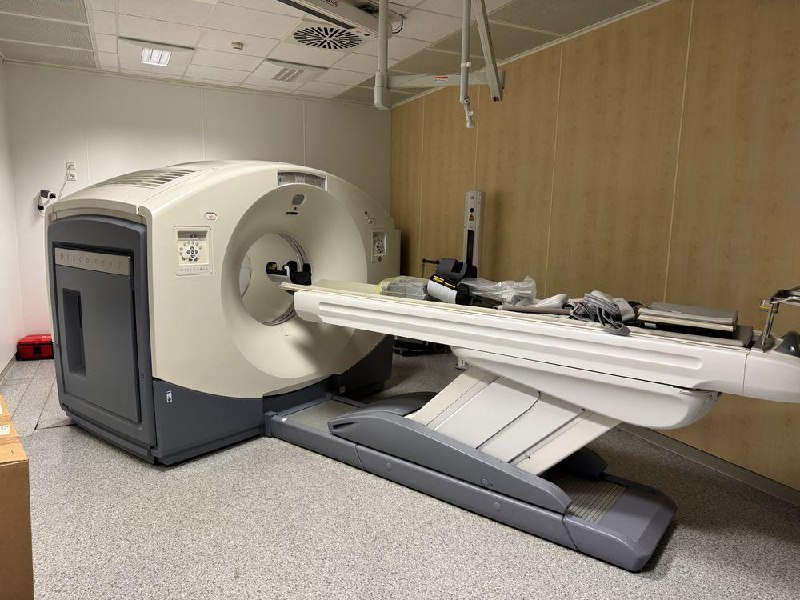
Practical considerations, risk points, and what to ask before you buy, service, move, or maintain imaging equipment.
A PET/CT scanner should be serviced on a preventive maintenance schedule built around the specific system, manufacturer guidance, scan volume, age, service history, room environment, and uptime requirements. There is no universal interval that fits every PET/CT site. A low-volume outpatient center, a hospital oncology program, and a mobile PET/CT trailer all carry different risk. The practical answer is to plan regular PM visits, monitor system behavior between visits, and call for service early when errors, image-quality issues, cooling alarms, table problems, or recurring downtime appear.
For PET/CT, waiting until the scanner is fully down is usually the expensive path. The modality combines two systems in one room: the PET side, the CT side, and the shared patient table, software, workstation, network, cooling, power, and site workflow that keep them moving together.
Why PET/CT service frequency matters
PET/CT downtime hurts more than a missed appointment. The schedule often depends on radiopharmaceutical timing, staffing, referring physician confidence, and a narrow operating window.
Preventive maintenance is not magic. It does not guarantee zero downtime. What it does is reduce avoidable surprises, document system condition, catch trends before they become failures, and give the facility a better parts and service plan. That matters on PET/CT because several high-impact components are expensive, specialized, or time-sensitive to source.
The CT tube, detector chain, PET detector electronics, table drive, cooling systems, workstation, acquisition software, and network connectivity all affect whether the system can complete studies.
For a broader planning view, read How Often Should Medical Imaging Equipment Be Serviced? and MIS service and support.
What changes the PET/CT PM schedule?
The right PET/CT service rhythm depends on risk factors. Start with manufacturer recommendations, then adjust the operating plan around real use.
- Scan volume: More daily studies usually means more table movement, tube use, detector demand, heat load, and workflow pressure.
- System age: Older systems can run well, but they need more attention to parts availability, service history, and repeat failures.
- CT workload: Some PET/CT systems use the CT portion heavily for attenuation correction and diagnostic CT; others use a lighter CT protocol mix.
- Room environment: Temperature, humidity, HVAC stability, chiller performance, dust, airflow, and power quality can change service risk.
- Prior PM history: A system with consistent PM records is easier to support than one with missing history and unknown parts condition.
- Uptime expectations: A facility with one PET/CT scanner and a full schedule should plan more conservatively than a site with backup capacity.
The mistake is treating PET/CT like a generic asset on a calendar. Calendar intervals matter, but the schedule should reflect how the system is actually being used.
CT-side service risks inside a PET/CT
The CT portion of a PET/CT scanner deserves its own attention. Tube condition, gantry operation, generator stability, detector performance, cooling, table motion, and error history can all affect uptime. A PET/CT scanner may still be described as a PET system by the team, but CT-side failures can stop the schedule just as quickly.
Key questions: how old is the CT tube, what is known about its usage history, are tube or generator errors recurring, is image quality stable, does the table move reproducibly, and are service logs showing intermittent issues that are getting more frequent?
Do not order a tube, board, detector component, or other major part based on a guess. PET/CT parts compatibility depends on manufacturer, model, serial, software level, options, and sometimes site configuration. Before requesting parts, use the process in How Do I Know Which Medical Imaging Equipment Parts I Need?, then route the request through MIS parts support.
PET-side and workflow issues to watch
The PET side brings a different set of risks. Detector performance, calibration history, acquisition consistency, reconstruction workflow, workstation behavior, and DICOM routing all affect whether studies move cleanly from patient to radiologist.
This is where service planning needs discipline. PET/CT issues can look like image-quality complaints, acquisition failures, workstation problems, network send failures, or repeat studies. Not every symptom means the same root cause. A qualified service review should separate scanner hardware, software, site environment, and connectivity before anyone starts swapping parts.
Facilities should track patterns, not just one-off complaints. If the same error repeats, image-quality concerns return, or staff develop workarounds to complete studies, the PM schedule may not be the real issue anymore. That is a service call.
When sharing screenshots, logs, photos, or reports with a service provider, remove patient information first. Do not send PHI in images, schedules, labels, worklists, reports, or exported documents.
Signs to call before the next planned PM
The next PM date should not be treated as permission to ignore a worsening issue. Call for service earlier if the PET/CT shows:
- Recurring system errors or aborted scans
- New or worsening image artifacts
- Cooling alarms, temperature warnings, or HVAC instability
- Unusual gantry, table, or mechanical movement
- Intermittent startup, acquisition, or reconstruction failures
- A pattern of the same fault returning after resets
Resetting a scanner over and over is not a service strategy. It may get through the day, but it can also hide the trend that would help a service team diagnose the problem faster.
For urgent downtime planning, see Emergency Imaging Equipment Repair: What to Do First.
PM, service contracts, and emergency repair are different
Preventive maintenance, service coverage, and emergency repair are related, but they are not the same thing.
PM is planned work. It helps inspect, clean, test, document, and identify developing risks. A service contract defines the support scope: PM-only, time and materials, full service, parts coverage, response expectations, exclusions, and documentation. Emergency repair is down-system triage.
A PET/CT facility should know which of those it has before the system fails. The worst time to discover that parts, travel, tube coverage, or after-hours support are excluded is when patients are already on the schedule.
If your facility is comparing support options, read Medical Imaging Service Contracts. If you are evaluating PET/CT ownership, replacement, or expansion, start with the PET/CT equipment page and the PET/CT cost guide.
What to send before asking about PET/CT service frequency
The fastest way to get useful guidance is to send a clean equipment snapshot. MIS can have a more productive conversation when the request includes:
- Modality and manufacturer
- Model, serial number, and software level if known
- Facility location and whether the unit is fixed or mobile
- Estimated scan volume and operating days
- Current symptoms, error codes, and downtime status
- Photos or screenshots only after removing PHI
- Urgency: planning, recurring issue, limited operation, or down scanner
That information helps separate a normal PM-planning question from a service risk, parts issue, site-environment issue, or replacement conversation. It also prevents the common mistake of quoting service based on a vague description like “GE PET/CT down” or “Siemens scanner needs PM.”
FAQ
How often should PET/CT preventive maintenance be performed?
It depends on manufacturer guidance, model, age, scan volume, environment, and uptime needs. Many facilities plan routine PM visits and adjust the schedule when service history, operating volume, or reliability changes.
Is PET/CT PM different from CT PM?
Yes. PET/CT includes CT-side checks, PET-side performance considerations, shared table and gantry systems, acquisition and reconstruction workflow, workstation behavior, cooling, power, and network connectivity. It should not be treated as only a CT PM.
Does preventive maintenance prevent all PET/CT downtime?
No. PM reduces avoidable risk and improves visibility, but tubes, electronics, detectors, cooling systems, software, and site conditions can still fail. PM is part of an uptime plan, not a guarantee.
Should mobile PET/CT units be serviced more often?
Mobile units may need closer planning because trailers introduce movement, leveling, site changes, power variation, HVAC load, and environmental stress. The right schedule depends on the trailer, scanner, route, volume, and service history.
What information should I send before requesting PET/CT service?
Send manufacturer, model, serial number, location, fixed or mobile status, scan volume, PM history, symptoms, error codes, downtime status, and PHI-free photos or screenshots if requested.
Schema recommendation
Use Article or BlogPosting schema for the post and FAQPage schema for the FAQ section. If the site supports approved service landing-page schema, PET/CT service and preventive maintenance can also support Service schema on a dedicated MIS service page. Do not use price, warranty, guaranteed-response, or offer schema unless MIS has approved exact public terms.
Need help planning PET/CT PM, service coverage, parts support, or replacement timing? Send the system details through the MIS quote page or contact MIS, and include modality, manufacturer, model, serial number, site location, service history, symptoms, downtime status, and urgency.
Need help with this exact problem?
Send the modality, site location, timeline, and any system details. MIS will route the request by intent.
Related resources
Ops Playbook
What Site Requirements Are Needed for a CT Scanner?
CT scanner site requirements include room fit, power, cooling, shielding review, access, IT, service clearance, and project planning.
Ops Playbook
How Long Does CT Scanner Installation Take? Planning Guide
CT scanner installation timing depends on site readiness, rigging, power, cooling, shielding review, IT, service support, and project scope.
Ops Playbook
How Quickly Can a CT Scanner Be Repaired After Downtime?
CT repair speed depends on diagnosis, parts, access, service history, and site readiness. Learn what helps a scanner get back online faster.