
Buyer's Desk
How Much Does Used X-Ray Equipment Cost?
May 29, 2026 · 6 min · Medical Imaging Specialists
Practical considerations, risk points, and what to ask before you buy, service, move, or maintain imaging equipment.
Considering a lease instead?
Equipment, service, PMs, parts, and applications support can be bundled into one monthly payment.
If this article is about financing, ROI, service contracts, or total cost of ownership, the leasing model may simplify the decision.
Used X-ray equipment can cost dramatically different amounts depending on what is included: the system type, detector, generator, tube, workstation, table or wall stand, installation, freight, room readiness, software, service history, and support after delivery. A portable unit, digital detector upgrade, fixed radiography room, R&F room, C-arm, and DEXA system are not the same purchase. The safer way to budget is to define the clinical workflow first, then compare quotes by total installed scope — not by the lowest hardware number.
If a quote does not say what is included, it is not a complete quote yet.
Why Used X-Ray Pricing Varies So Much
The phrase “used X-ray equipment” covers a wide range of systems. A small clinic replacing an older analog room may need a basic fixed radiography setup. An orthopedic group may care more about detector speed, stitching workflow, table movement, and PACS connectivity. A mobile provider may be looking at portable X-ray units, battery condition, detector durability, and service access across multiple sites.
That is why one used X-ray quote can look much cheaper than another and still be the worse buy. The lower quote may exclude the detector, workstation, wall stand, shipping, installation, calibration support, cables, software licensing, or service after startup. It may also assume your room is already ready for the system.
Before comparing prices, start with the used X-ray equipment buying checklist. It helps separate a usable system from a cheap pile of parts.
The Biggest Cost Drivers in Used X-Ray Equipment
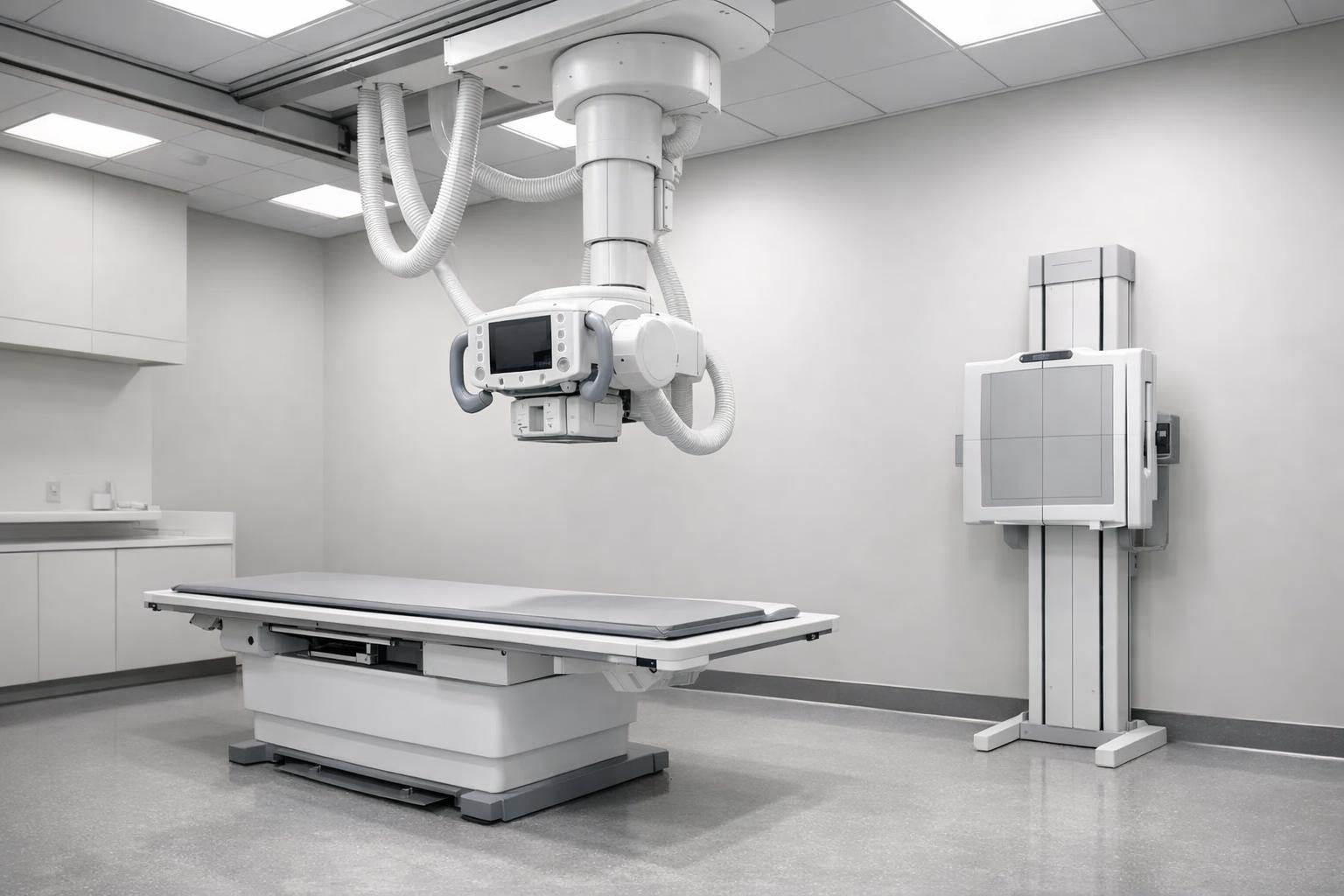
The first cost driver is system type. Fixed DR rooms, portable X-ray units, detector upgrades, R&F rooms, C-arms, DEXA systems, and complete replacement projects all have different equipment scopes. A “room” may include the tube, generator, collimator, table, wall stand, tube stand, detector, console, workstation, cables, and accessories. Or it may include only part of that list.
The second driver is the detector and workstation. In many modern X-ray rooms, the detector path is where the workflow value lives. A system with a reliable digital detector, usable workstation, current software, and clean PACS routing can be worth far more operationally than a cheaper system with a weak detector path.
Condition matters too. Ask for service history, photos, component details, age, usage, known faults, and what testing was performed before sale. If you are not sure what parts belong in the quote, review what parts X-ray machines need to work properly before signing anything.
Do Not Compare Hardware Price Alone
A complete used X-ray project includes more than equipment. Freight, rigging, delivery access, installation labor, room preparation, electrical work, networking, PACS coordination, acceptance testing support, preventive maintenance planning, and future parts support can all affect the real budget.
This is where buyers get burned. They compare three quotes and choose the lowest number, then discover that the winning quote excluded the items that make the room functional. The quote was not truly cheaper. It just moved the cost into later surprises.
A better comparison asks:
- Is the detector included?
- Is the workstation included and usable for our workflow?
- Are the table, wall stand, tube stand, cables, and accessories included?
- Who handles installation and startup support?
- What site requirements are assumed?
- Who supports service after the system is installed?
- Are parts available for this model?
MIS sells and supports imaging equipment, but the practical lesson is bigger than MIS: a quote should match the room, not just list hardware. If you need a complete scope, start with the X-ray equipment quote checklist or request a project review through /quote.
Used, Refurbished, or New: Which Budget Is Realistic?
Used equipment is usually the lowest initial-cost path, but it carries the most buyer responsibility. You need to know what was tested, what is missing, who will install it, and how it will be serviced.
Refurbished equipment should cost more than as-is used equipment because the vendor is doing more work before delivery. That may include inspection, replacement of failed or worn components, cleaning, configuration, documentation, testing, and project coordination. The word “refurbished” should mean a documented process, not a fresh paint job and a hopeful invoice.
New equipment may make sense when the facility needs a manufacturer-backed current platform, specific software features, a standardized fleet, or the lowest tolerance for parts obsolescence. But many outpatient facilities, orthopedic groups, urgent care centers, and replacement projects can make a smart used or refurbished purchase if the system is correctly matched and supported.
The right budget depends on risk transfer. The more testing, installation support, service coverage, and parts planning included, the less operational risk lands on the buyer.
What to Send Before Asking for a Price
A vendor can give a rough range with little information, but a useful quote needs context. Send enough detail to let the seller quote the room you actually need.
Include:
- Facility location and delivery constraints
- Clinical use case and expected exam volume
- Fixed room, portable, replacement, new build, or detector upgrade
- Current equipment make, model, and serial if replacing a system
- Room photos, drawings, and access path if available
- Detector, workstation, PACS, RIS, or modality worklist needs
- Timeline and whether the room is already prepared
- Service expectations after installation
- Budget constraints or must-have features
This does not need to be perfect. It just needs to be honest. A good equipment partner can help translate workflow into a scope, but they cannot responsibly quote the right system from “need X-ray machine price” alone.
For active inventory and categories, start at /equipment/x-ray-equipment and the broader /equipment page. For parts and service planning, see /parts and /services.
Common Mistakes That Make Used X-Ray Cost More
The most common mistake is buying an incomplete system because the price looks attractive. Missing detectors, cables, tables, wall stands, software, or installation support can erase the savings quickly.
The second mistake is ignoring room readiness. Power, space, shielding review, HVAC, networking, floor access, door clearances, and delivery logistics can affect timeline and budget. Even when the X-ray system itself is available, the project can stall if the site is not ready.
The third mistake is treating service as an afterthought. X-ray systems need parts, technical support, PM planning, and a qualified service path. If the seller cannot explain how the equipment will be supported after installation, the buyer is taking on that risk.
Finally, do not assume every issue is solved by ordering a part. Sometimes the symptom is not the root cause. Detector faults, generator issues, image artifacts, communication problems, and movement faults often need proper diagnostic work before money is spent.
FAQ
How much should I budget for used X-ray equipment?
Budget depends on the system type, detector, condition, installation scope, service support, freight, and room readiness. A complete fixed-room project is not the same budget as a portable unit or detector upgrade. Ask for a total installed scope, not just a hardware price.
Is refurbished X-ray equipment worth more than used equipment?
Often, yes. Refurbished equipment should include inspection, testing, replacement or repair work where needed, configuration, documentation, and a clearer support path. The key is documentation. If the vendor cannot explain the refurbishment process, treat the claim carefully.
What is usually missing from cheap X-ray quotes?
Common missing items include the detector, workstation, cables, installation labor, shipping, site work, PACS configuration, service coverage, accessories, or clear documentation. Cheap quotes are not always bad, but they need careful scope review.
Can MIS help compare used X-ray quotes?
MIS can help review the intended clinical use, system configuration, site constraints, service needs, and parts availability so you can compare quotes more realistically. The goal is to understand operational risk before purchase.
Should I buy used X-ray equipment or lease mobile imaging instead?
It depends on volume, timeline, capital budget, staffing, room readiness, and whether the need is permanent or temporary. If the requirement is short-term or site readiness is uncertain, MIS can also discuss /leasing/mobile options.
Schema recommendation
Use Article or BlogPosting schema for the article and FAQPage schema for the FAQ section. Consider Service schema on linked X-ray service, parts, or equipment pages where the scope is specific and approved. Avoid Product or Offer schema on this article unless exact inventory, availability, condition, and pricing are approved.
Need a realistic X-ray equipment budget? Send MIS your use case, location, room details, desired workflow, timeline, and service expectations through /quote or /contact, and the team can help scope the right used or refurbished option before you buy the wrong one.
Need help with this exact problem?
Send the modality, site location, timeline, and any system details. MIS will route the request by intent.
Related resources
Buyer's Desk
What Is a Fair Price for Used X-Ray Equipment?
A fair used X-ray equipment price depends on scope, detector condition, site readiness, installation, service, parts, and support.
Buyer's Desk
How Much Does Used Medical Imaging Equipment Cost?
Used medical imaging equipment cost depends on modality, model, condition, site work, installation, service, parts, and support scope.
Buyer's Desk
Best Used MRI for an Outpatient Imaging Center
Choose the right used MRI for an outpatient center by matching field strength, bore size, coils, site needs, service, and volume.