
Ops Playbook
How Much Does MRI Deinstallation and Rigging Cost?
July 2, 2026 · 7 min · Medical Imaging Specialists
Practical considerations, risk points, and what to ask before you buy, service, move, or maintain imaging equipment.
Considering a lease instead?
Equipment, service, PMs, parts, and applications support can be bundled into one monthly payment.
If this article is about financing, ROI, service contracts, or total cost of ownership, the leasing model may simplify the decision.
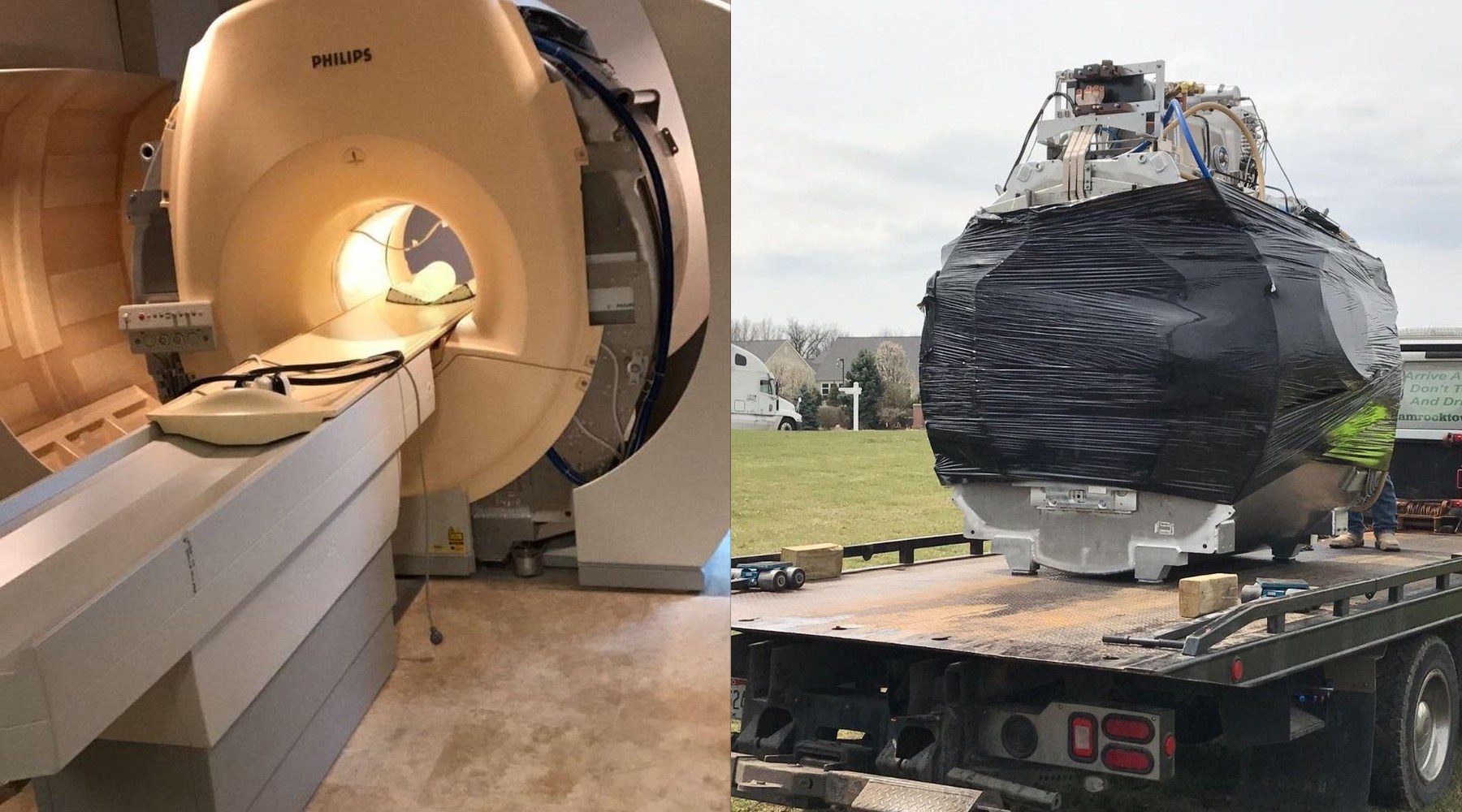
MRI deinstallation and rigging cost depends on scanner type, magnet status, room access, route constraints, floor level, loading dock, crane or forklift needs, labor rules, transport distance, and whether the system is being sold, relocated, stored, or removed for parts. There is no safe flat number without reviewing the site. A cold superconducting MRI in a tight hospital suite is not the same job as a permanent open MRI near an exterior door.
The right first step is to document the system, room, route, and removal goal before anyone quotes the work.
Why MRI rigging cost varies so much
An MRI removal is not just a moving job. It is equipment preservation, facility protection, safety planning, and logistics all happening at once. The magnet may weigh several tons, the components may have resale value, and the building route may only leave inches of clearance.
That is why two MRI deinstallation projects can look similar on paper and price very differently. One facility may have a ground-floor room, wide hallway, direct dock access, and a planned replacement. Another may have a second-floor suite, tight turns, limited after-hours access, no freight elevator path, and a magnet needing specialized planning.
Cost is usually driven by scope. Clearing a room, selling a working MRI, relocating the system, trading it toward replacement, or harvesting parts all change how components must be labeled, packed, protected, and documented.
If timing is the bigger question, read MIS’s MRI deinstallation timeline guide. If you are selling the system, start with how to sell a used MRI machine before you separate equipment value from removal cost.
The main cost drivers in MRI deinstallation
The first driver is the MRI itself. Manufacturer, model, field strength, bore size, magnet type, cabinet layout, coils, chiller, workstations, and current status all affect scope. A complete 1.5T system being preserved for resale needs different handling than an incomplete system.
The second driver is magnet status. A cold superconducting magnet, a ramped-down magnet, and a permanent magnet create different planning requirements. Magnet status can affect safety review, service coordination, transport assumptions, and rigging-day staffing.
The third driver is access. Door widths, hallway turns, ceiling height, floor protection, thresholds, elevator capacity, loading dock geometry, exterior path, parking, crane access, and building work rules all matter. A route that is easy for people can still be difficult for a magnet.
The fourth driver is site control. Hospitals and imaging centers may require credentialing, insurance certificates, infection-control review, security coordination, after-hours scheduling, dock reservations, contractor escorts, and construction phasing. Those requirements may be necessary, but they still affect labor and calendar time.
Transport is another variable. Local removal to storage is not the same as cross-country freight, export crating, or delivery to a buyer. If the MRI is going into another clinical site, packing and documentation should match the future use of the system.
What information helps MIS estimate the job
Before asking for an MRI deinstallation or rigging estimate, gather enough detail for a real review: manufacturer, model, field strength, serial number if available, install year if known, current operating status, magnet status if known, and why the system is being removed.
Site details matter just as much. Send the room location, floor level, doorway widths, hallway route, tight turns, elevator details, loading dock, exterior access, ceiling concerns, target window, and facility work restrictions.
Photos are often the fastest way to understand scope. Include the scan room, control room, cabinets, chiller or support equipment, hallway route, doors, turns, elevators, loading dock, exterior path, and anything that looks tight. Measure where possible instead of guessing.
Do not send patient information. Check console screens, labels, schedules, reports, paperwork, reflections, and folder names before sharing photos or documents. The deinstallation team needs equipment and route information, not PHI.
If you are also replacing the scanner, compare the removal plan against used MRI site requirements before buying. The old system and next system should be planned as one project whenever possible.
Common mistakes that make MRI removal more expensive
The most common mistake is treating rigging as an afterthought. Facilities often focus on the replacement scanner first and assume the old MRI can be removed quickly once the new schedule is set. That creates rushed route reviews, limited labor windows, and avoidable surprises.
The second mistake is quoting from incomplete information. A vendor cannot price a difficult MRI route from one photo of the magnet. Route, dock, exterior access, magnet status, equipment completeness, and destination all matter. If the quote feels too easy, check what is excluded.
The third mistake is separating resale from removal. If the MRI has resale or parts value, the deinstallation should protect that value. Missing coils, undocumented cabinets, damaged covers, cut cables, or poor packing can turn a stronger asset into a weaker one.
The fourth mistake is assuming construction is always required. Sometimes wall removal is necessary. Sometimes careful measurement, the right equipment, and a route plan built by people who have moved magnets before can avoid it. MIS has field experience with MRI magnet removal without wall demolition, but every site has to be reviewed on its own facts.
Sale, trade-in, relocation, or removal-only
The purpose of the project changes the economics. If you are selling a used MRI, the buyer may care about service history, coils, software, magnet condition, documentation, and how the equipment is removed. A clean deinstall can support value.
If you are trading the MRI toward a replacement, removal timing has to line up with room turnover, construction, delivery, installation, and service coverage. The lowest rigging quote may not be the best quote if it creates downtime.
If you are relocating the MRI, the receiving site becomes part of the scope. Packing, transport, storage conditions, reinstallation planning, chiller handling, RF room coordination, and service support all need review before the magnet moves.
If the system is removal-only or parts-only, speed may matter more than preservation. Even then, MRI safety, facility protection, and proper disposal or parts handling still matter.
MIS can help connect the equipment question to the logistics question through MRI equipment, field service, medical imaging parts, and equipment quotes. That full view is where many projects avoid expensive surprises.
Checklist before requesting an MRI rigging quote
Use this checklist before asking for a number:
- MRI manufacturer, model, field strength, serial number, install year, operating status, and magnet status
- Removal reason: sale, trade-in, replacement, relocation, storage, parts, or disposal
- Coil, workstation, cabinet, chiller, injector, and accessory inventory
- Room, equipment-room, control-room, route, dock, and exterior photos
- Door, hallway, turn, elevator, dock, and exterior measurements
- Floor level, building rules, credentialing requirements, work-hour restrictions, target date, and destination
The cleaner the intake, the more useful the estimate. “How much to remove an MRI?” starts a long question chain. “GE Optima MR450w, cold magnet, ground floor, 42-inch narrowest door, direct dock access, resale removal in late August, photos attached” gives a project team something to work with.
FAQ
How much does MRI deinstallation and rigging cost?
It depends on the MRI model, magnet status, room access, route difficulty, labor requirements, equipment needed, transport scope, site rules, and whether the system is being preserved for resale or simply removed. MIS should review photos, measurements, details, and timing before giving direction.
Can a facility remove an MRI itself?
No. MRI deinstallation and rigging should be handled by qualified service, logistics, and rigging professionals. The work involves heavy equipment, magnet safety, building protection, component handling, and coordination with the facility. This is not a DIY project.
Does deinstallation affect MRI resale value?
Yes, it can. Proper labeling, accessory control, careful component handling, documentation, and protected transport can help preserve value. Missing parts, damaged covers, cut cables, undocumented coils, or poor packing can reduce buyer confidence.
What photos help estimate MRI rigging?
Send clear photos of the MRI room, magnet, table, cabinets, workstations, chiller or support equipment, doorway route, hallway turns, elevators, loading dock, exterior path, and any tight clearance. Remove or redact patient information before sending anything.
Is MRI removal included when selling the system?
Sometimes, but never assume it. Sale, trade-in, deinstallation, rigging, freight, storage, and installation may be separate scopes. Ask what is included, who coordinates each step, and what the facility remains responsible for.
Schema recommendation
Use Article or BlogPosting schema for the post and FAQPage schema for the FAQ section. Because this topic supports deinstallation, equipment sales, service, and logistics, Service schema may also be appropriate on the related service or quote pages. Do not use fake pricing, guaranteed timelines, or offer schema unless approved project data exists.
Get the route reviewed before the date is locked
If you are budgeting MRI deinstallation, sale, trade-in, relocation, or replacement, send MIS the system details, route photos, measurements, removal goal, location, and target timing. Start with /quote for equipment and project review, or contact the team through /contact before the removal date becomes the problem.
Need help with this exact problem?
Send the modality, site location, timeline, and any system details. MIS will route the request by intent.
Related resources
Ops Playbook
What Site Requirements Are Needed for a CT Scanner?
CT scanner site requirements include room fit, power, cooling, shielding review, access, IT, service clearance, and project planning.
Ops Playbook
How Long Does CT Scanner Installation Take? Planning Guide
CT scanner installation timing depends on site readiness, rigging, power, cooling, shielding review, IT, service support, and project scope.
Ops Playbook
How Quickly Can a CT Scanner Be Repaired After Downtime?
CT repair speed depends on diagnosis, parts, access, service history, and site readiness. Learn what helps a scanner get back online faster.